PanelVerse
Original comics and manga
Browse illustrated fiction built for focused reading across phone, tablet, and desktop.
PanelVerse
Browse illustrated fiction built for focused reading across phone, tablet, and desktop.
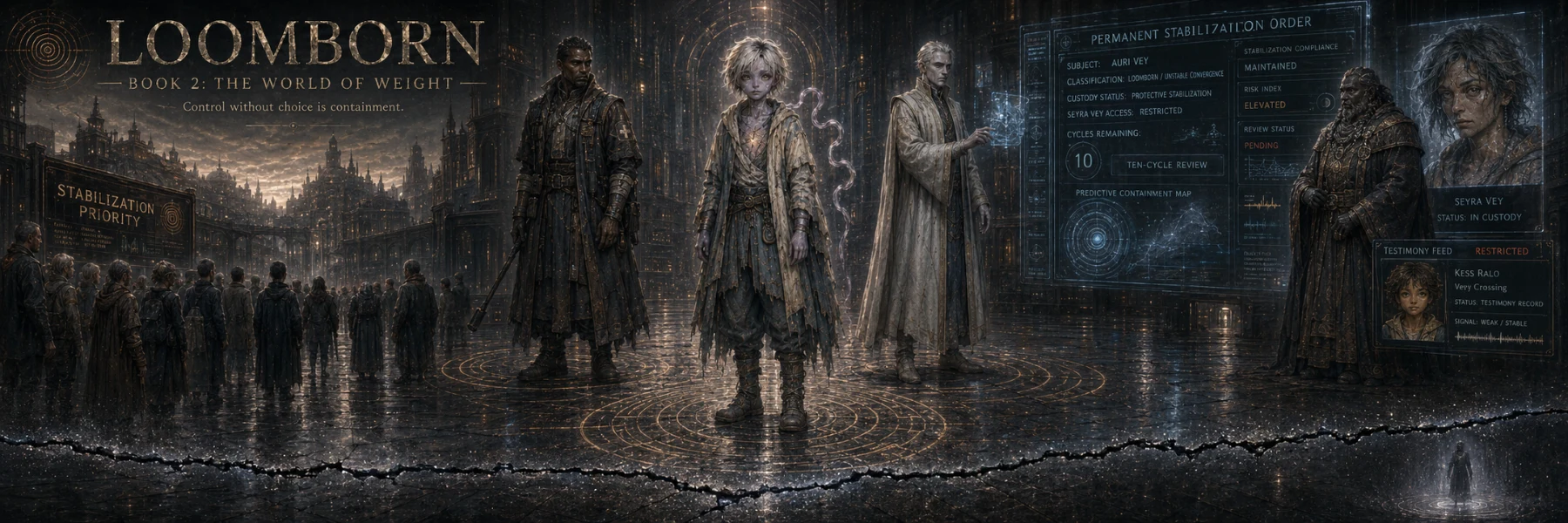
LOOMBORN: The World of Weight
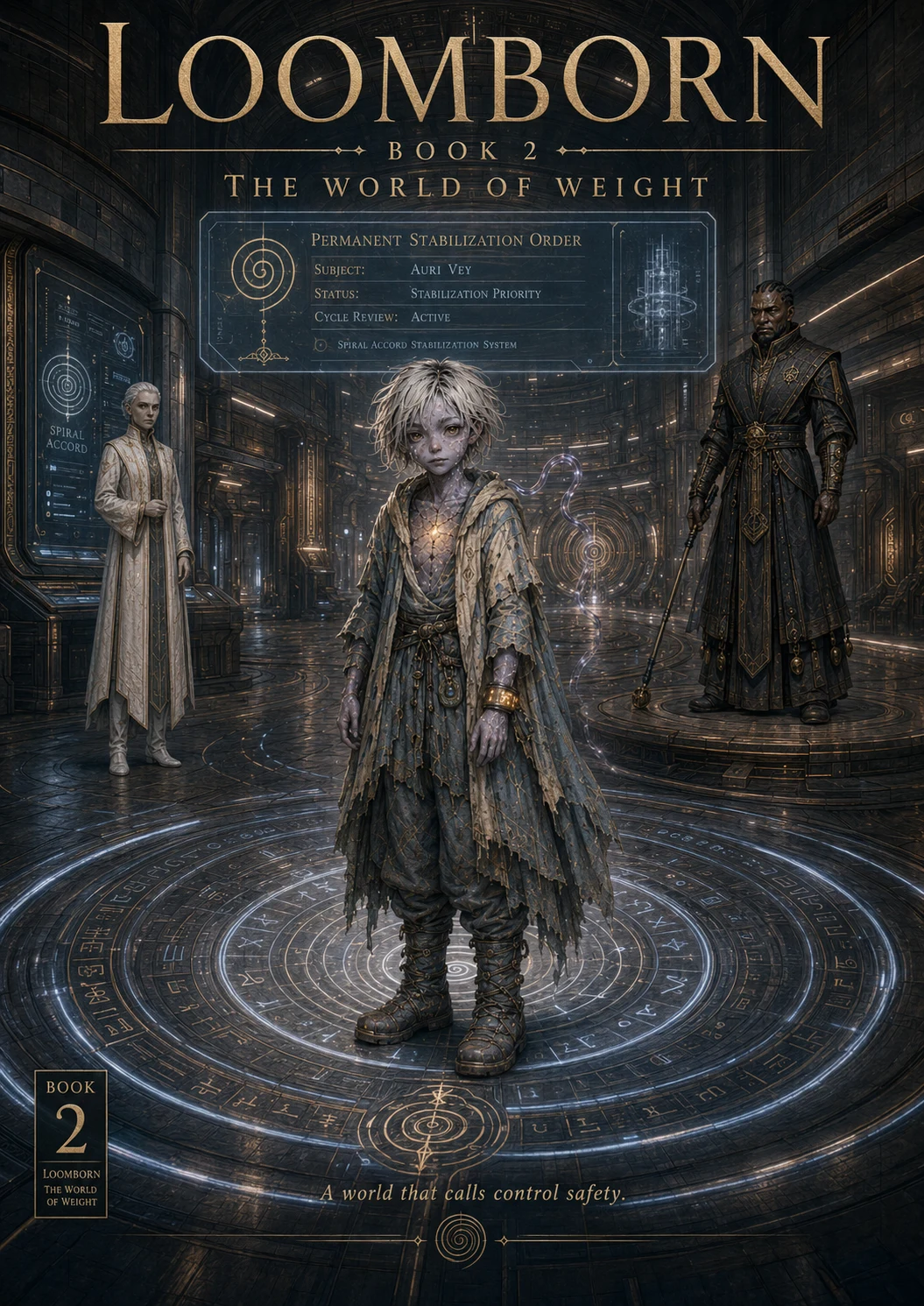
A sci-fantasy graphic novel about an alien child born between worlds, now trapped on Gravara where weight, pressure, and protection become control.
LOOMBORN: The World of Weight continues Auri Vey’s story after the events of Book 1. Taken to Gravara under Accord custody, Auri is placed inside a world built on pressure, discipline, stabilization, and public order. The Accord calls it protection. Gravara calls it training. But every safe route, sealed file, pressure band, and official label teaches Auri the same lesson: control can look like care. Separated from Seyra, watched by Oryn, trained by Master Vaul Ren, and judged by a society that fears what it cannot classify, Auri must learn what weight really means — not only on the body, but in names, records, silence, distance, and belonging. As old Gravaran layers begin to answer beneath the facility, Auri discovers that the system holding them may be built on a much older containment than anyone admits.
Reading order
10 readable
Chapter 1
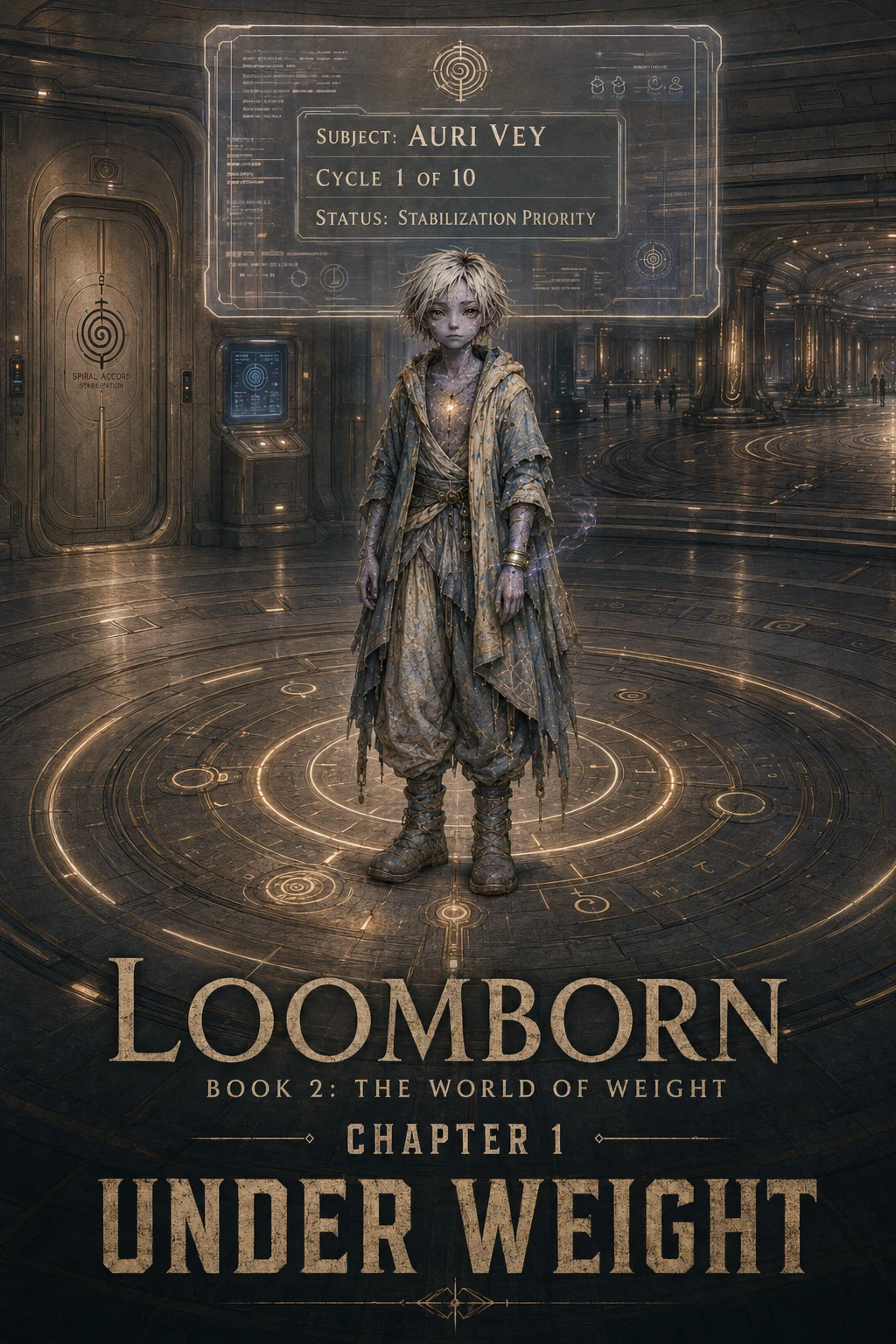
22 pagesBook 2 begins with consequence. After the events of Book 1, Auri arrives on Gravara, the world of weight, pressure, and stabilization. The Accord tells Auri they are safe here, but the first thing safety does is close around them. They are brought into a soft, clean containment room where intake begins immediately. Auri is not punished violently. They are processed calmly. The system identifies Auri as Loomborn, places them under Protective Stabilization, and begins Cycle 1 of 10. Seyra is not shown as a person, only as restricted data: Guardian Access Denied. Every question Auri asks about Seyra becomes a condition, a pending request, or a review field. As Auri is moved through Gravara, the world turns custody into ordinary public language. Screens call them Stabilization Priority, Subject, and Contained. Civilians are not cruel, but they are trained to keep distance. A child notices Auri and whispers the word that follows them through the chapter: Collapse-child. The emotional danger of Gravara is not violence. It is spacing, procedure, labels, and calm systems that make Auri feel like a public risk before they have done anything. Then Auri reaches the Pressure Training Hall, where Master Vaul Ren begins instruction. Vaul is not warm, soft, or comforting, but he is different from the Accord. The Accord measures Auri from the outside. Vaul teaches Auri to listen from the inside. He tells Auri: “Fear does not need to vanish. It needs to stop choosing first.” Through small, repeated movements, Auri learns to notice the tiny moment before fear becomes weight. For the first time on Gravara, the lesson gives Auri something useful instead of only taking data. But the Accord records the progress anyway and attaches it to Seyra’s pending access review. The chapter ends with three different names surrounding Auri: Student — the private word Vaul gives them. Subject / Priority — the official word the Accord keeps using. Collapse-child — the public word Gravara has already learned. Auri is returned to the containment room, still under review, still separated from Seyra, still wearing the pressure band. But they keep one small word inside: Student. Chapter 1 is about Auri entering a world where everything has weight — even names.
Chapter 2
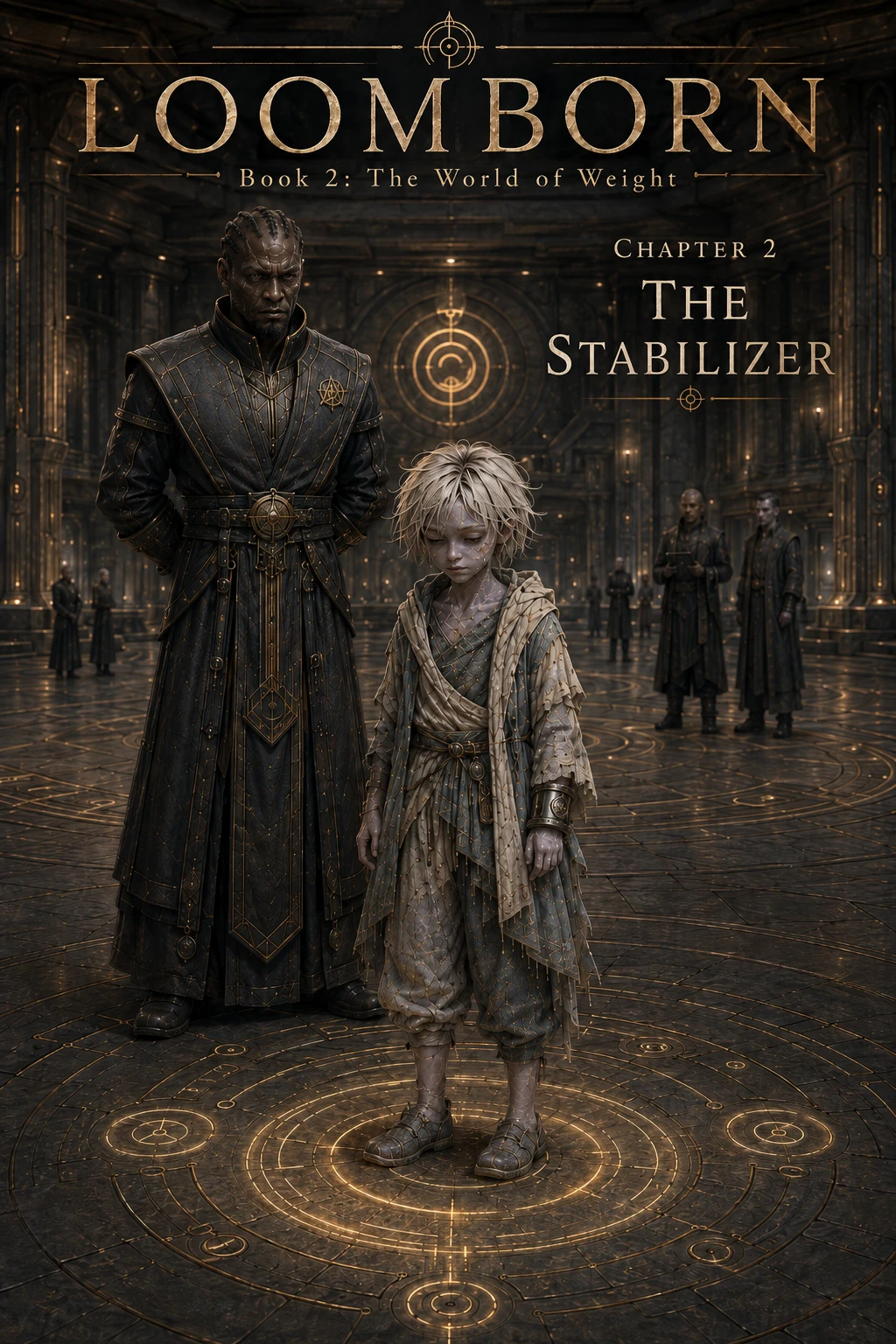
22 pagesChapter 2 continues directly after Under Weight. Auri wakes in the containment room with one small private word from Vaul’s first lesson: student. But the room immediately answers with official language: Subject Status: Stabilization Priority and Cycle 2 of 10. The chapter begins with that pressure between Auri’s private self and the system’s public label. As Auri is escorted back through the pressure transit route, Gravara’s public rules return. Civilians are not cruel, but they move away with trained politeness. Adults guide children back with the phrase standard distance. Auri is not insulted loudly. The corridor itself teaches everyone where to stand. In the Pressure Discipline Hall, Vaul Ren continues the lesson from Chapter 1. He does not tell Auri to perform for the Accord or prove usefulness for Seyra’s access review. Instead, he slows everything down. Before Auri steps onto the mark, Vaul stops them and asks why the body moved. Auri realizes they were obeying because waiting makes people watch harder. Vaul begins teaching Auri to notice the moment before fear becomes weight. The lesson becomes smaller and smaller: Auri notices where fear starts. Auri stops their hand before it reaches the pressure band. Auri lifts one heel and holds one breath. Auri learns to move without giving the room every beginning. The Accord still records everything. Even reduced signals become data. Even progress becomes cycle review. Even Seyra remains a pending access field. But Vaul does not deny the system’s reach. He teaches Auri to keep going anyway. The core turn of the chapter comes when Auri asks if reducing what the room can see means hiding. Vaul gives the clearest distinction of the chapter: “Hiding is for what you are ashamed to have.” “Keeping is for what is yours.” That changes the meaning of privacy for Auri. Not everything private is a lie. Not everything unshown is shame. Some private things are boundaries. By the end of the session, Auri can make one real movement while keeping the start partly unmeasured. The record has a blank space, and Auri has a place to stand. The system still keeps them. The band is still attached. The room still closes the same way. But one small beginning stays unnamed. Chapter 2 is about Auri learning that something can be real without being shown — and that is what lets it stay theirs.
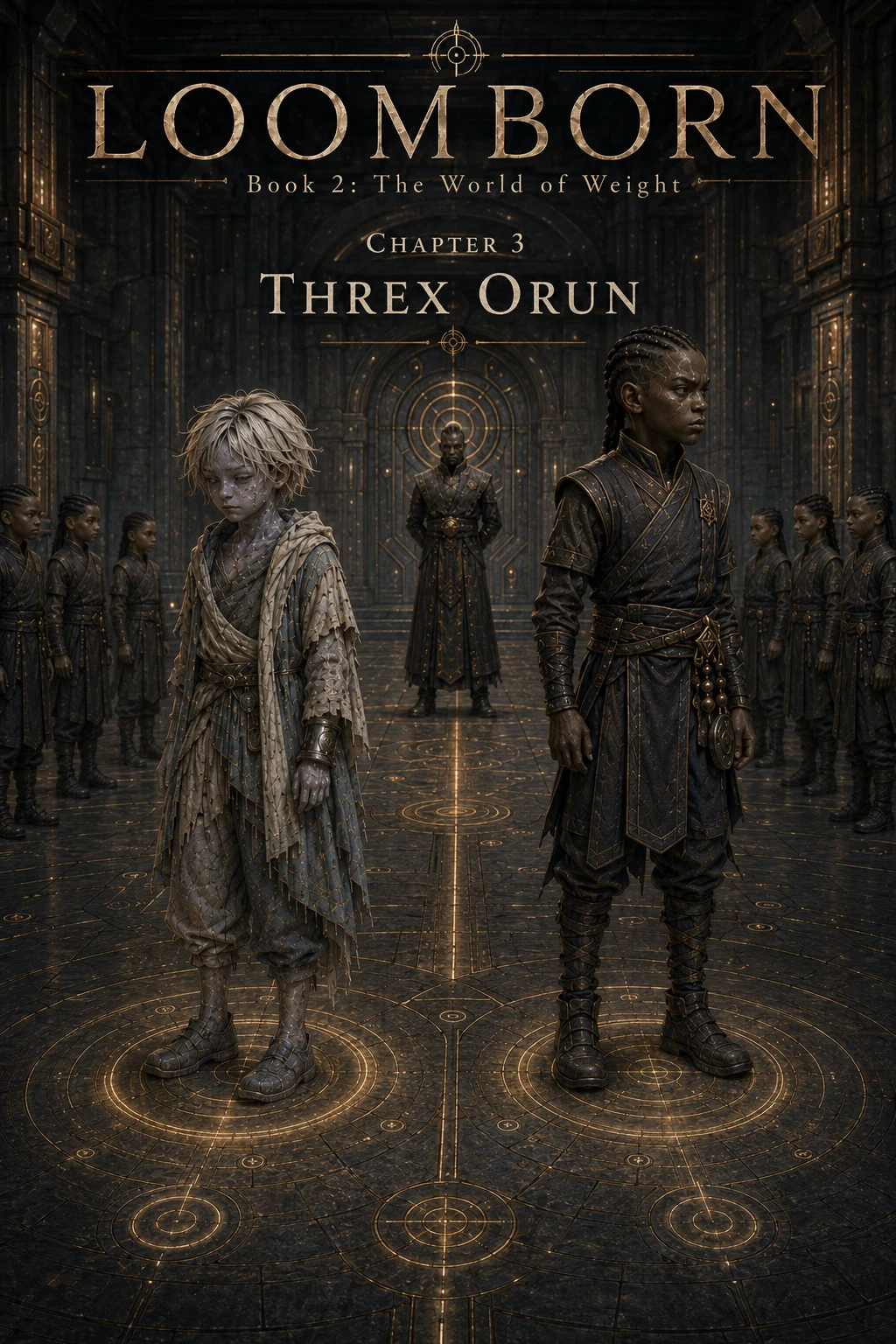
Chapter 3
22 pagesChapter 3 brings Auri’s private control into a public training space. After learning to keep one small internal beginning from the Accord’s full measurement, Auri returns to the Pressure Training Hall expecting another lesson with Vaul. But the hall is no longer empty. Other Gravaran trainees are already practicing, already placed, and already moving like they belong there. Auri enters with custody still attached: the pressure band, the officers, the watched status. This is where Auri first notices Threx Orun. Threx does not step back. He does not mock Auri. He does not attack. He does not become a simple bully. His pressure comes from discipline. In Gravara, placement matters, and Threx’s refusal to move says enough: I belong here. Do you? As Auri joins the trainee line, the room begins comparing them without calling it a contest. Threx performs the standard drills with exact control. His weight, breath, posture, and placement are clean because he has trained for this. The system treats his correctness as ordinary. Auri performs the same movements, but the room records them differently. Threx is a trainee. Auri is monitored. Threx has the line. Auri has the band, the officers, and the separate record. That difference becomes the heart of the chapter. Threx finally speaks from his wound: “Rare does not mean ready.” The line hurts because it is not simple cruelty. Threx has trained to carry correctly, but the system treats that discipline as expected. Auri has not earned Gravara’s version of control, yet the room gives Auri its rarest attention. Auri’s answer is quiet, and it changes the shape of the scene: “I was watched before anyone taught me.” That is Auri’s wound. Threx was taught before he was watched. Auri was watched before they were taught. Vaul does not turn the moment into comfort or punishment. He keeps both wounds inside discipline. He does not let the scene become a duel, but the room still compares them anyway. By the end, Auri and Threx are on the same floor, following the same instruction, under the same training structure. But the chapter makes the truth clear: They are not carrying the same thing. Chapter 3 is about peer pressure becoming internal. The room does not need to compare Auri anymore. Auri begins doing it first. And that may be the heaviest pressure Gravara has taught them yet.
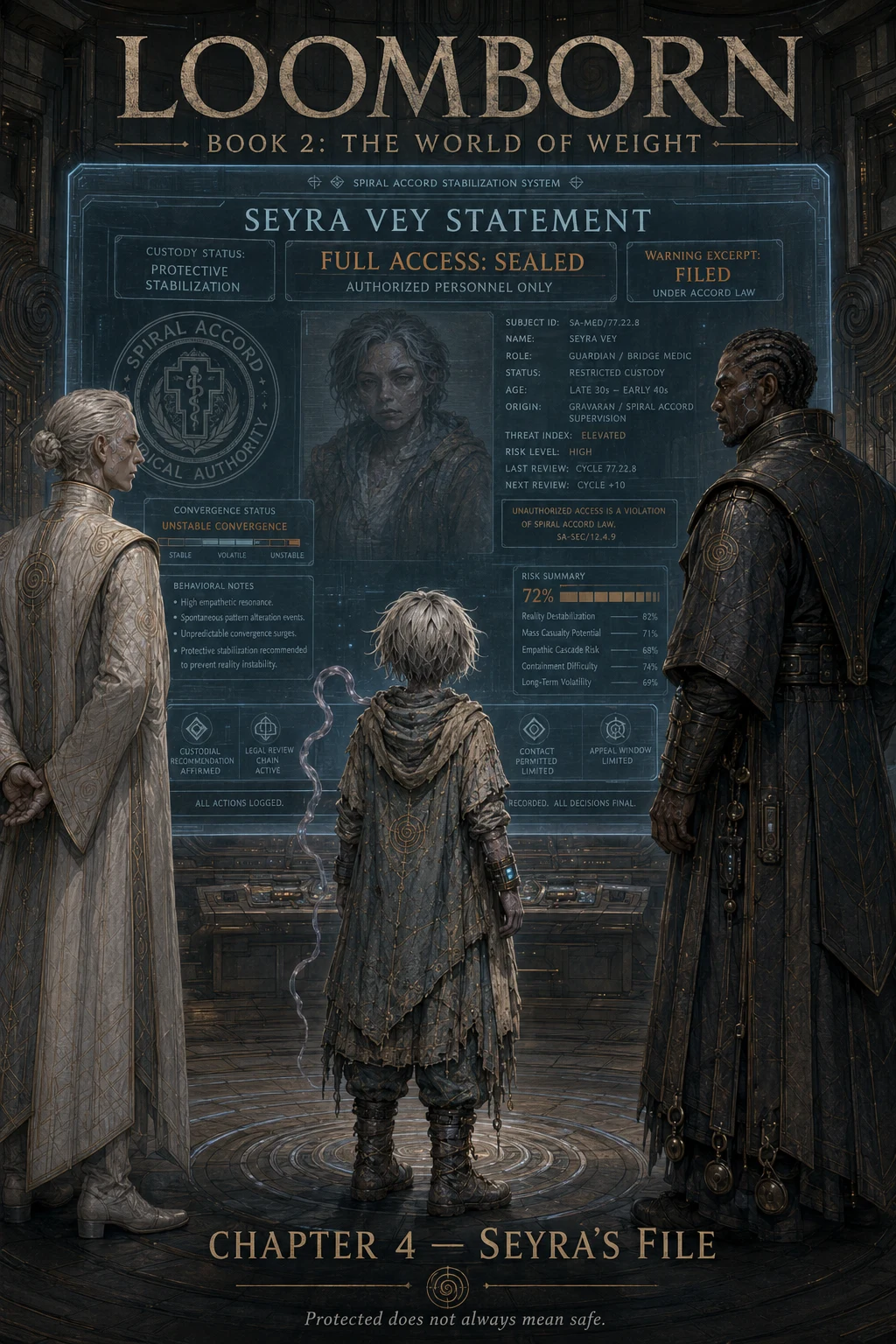
Chapter 4
22 pagesChapter 4 shifts the pressure away from the training line and into restricted information. After Chapter 3, Auri is escorted out of the Pressure Training Hall and back through administrative routes. The peer pressure recedes, but the system does not. The corridor screens update beside Auri, and Seyra becomes something colder than a person: an access field. Auri asks the question that matters most: “Where is Seyra?” But the answer does not come as comfort, location, or medical truth. It comes as system language: Guardian Access: Pending Status Review: Active Details: Restricted Auri realizes the file does not even clearly say whether Seyra is being treated or held. Oryn does not lie. He admits the facility does not separate those reviews cleanly. That is the chapter’s first wound: care and custody are using the same room. The restriction around Seyra’s file becomes heavier. A Gravaran authority layer appears over the file, older than a normal temporary seal. Auri notices the same kind of pattern hidden in the facility walls, suggesting the restriction is not only in the record — it is built into the place itself. Vaul enters the file situation, but he does not become a rescuer. He cannot open Seyra’s file. What he can do is recognize the structure. When Oryn says the guardian file is not available for stabilizer review, Vaul names the problem plainly: “Then it is not only care.” That line changes how Auri reads the word protected. The Accord says Seyra is protected. But the file defines protection as suspended communication, restricted visitation, sealed statement access, and authority review. Protected should mean safe. Here, it means unreachable. The chapter then turns from absence to motive. Auri discovers Seyra gave a statement, but the full statement is sealed. Kess’s message also arrives, but it is edited into evidence: apology, fear, testimony label, missing context. Auri begins to understand that the system did not only record fear. It helped shape fear into usable evidence. Then one line from Seyra’s sealed statement is released: “Do not continue stabilization until the old layer is identified.” This is the chapter’s biggest turn. Seyra did not vanish silently. Seyra tried to interrupt the process. The old layer connects the file seal, the hidden wall grooves, and the warning. Seyra’s concern is not only about Auri’s body. It is about the place holding Auri and the older structure beneath Gravara’s current system. But the system does not stop. The warning is filed. The Permanent Order assessment continues. By the end, Auri still does not know where Seyra is. They only know Seyra said something the system is keeping, and the next stabilization review remains scheduled. Chapter 4 is about withheld truth. Auri asks for Seyra and receives procedure. Seyra warns the system, and the system turns the warning into a file. Seyra had spoken. The system kept the rest.
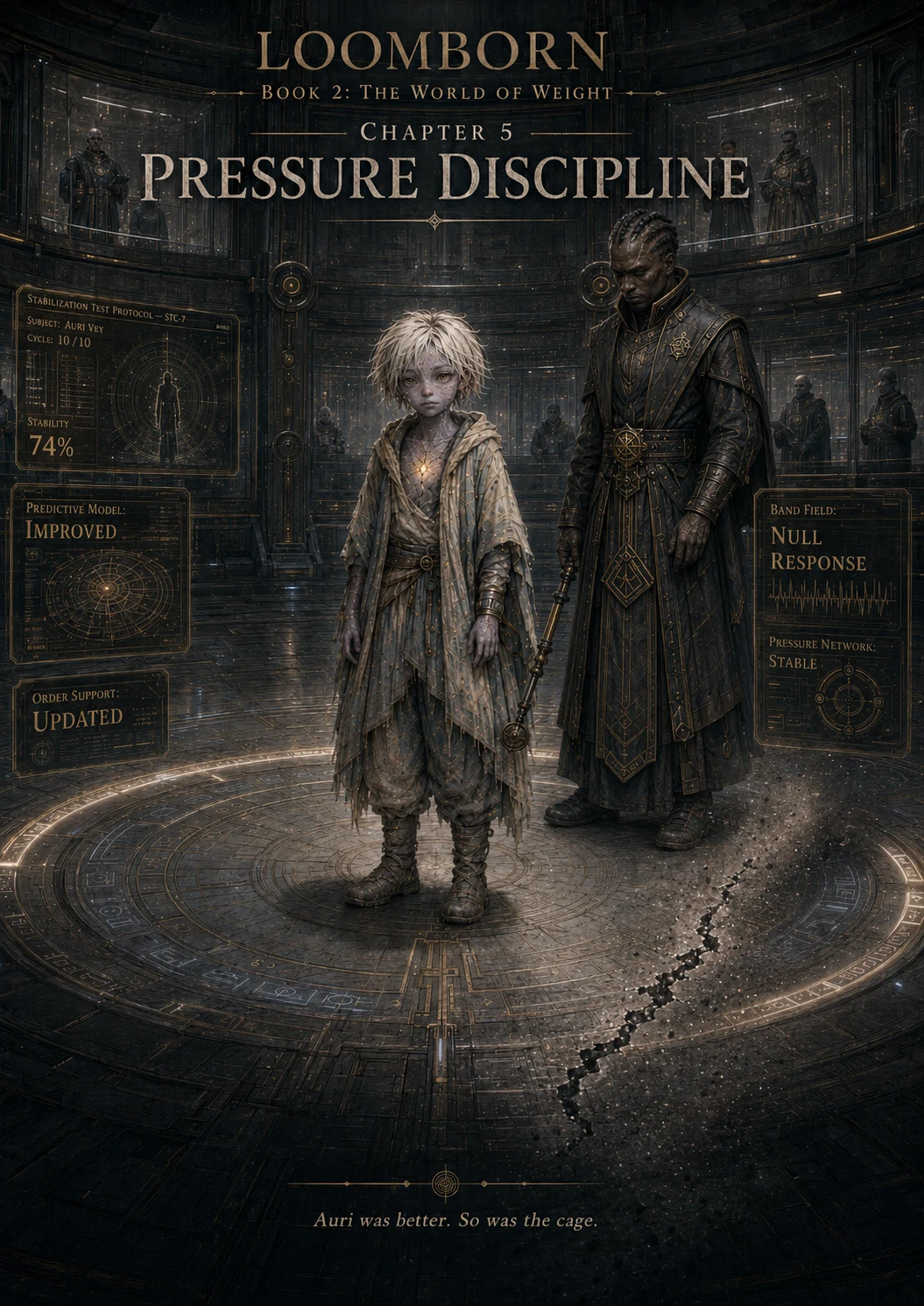
Chapter 5
22 pagesChapter 5 begins with the warning Seyra left behind. Seyra told the system not to continue stabilization until the old layer was identified. The warning is filed, recorded, and acknowledged — but the review continues anyway. That is the chapter’s engine: the system does not ignore the warning. It absorbs it, then keeps moving. Auri enters a quieter review chamber with Vaul. This is not the public trainee line anymore. It is smaller, more controlled, and more procedural. Vaul returns as a stabilizer, not a rescuer. His lesson is real: Auri must stop performing control and learn to place it. Auri begins to improve. They learn not to meet pressure before it arrives. They wait until the pulse reaches the mark. They place the response downward instead of outward. They repeat the same size, the same time, the same small condition. For Auri, this is difficult, meaningful progress. But the system records every piece of it. Auri’s timing becomes predictive value. Auri’s repeatability becomes containment mapping. Auri’s voluntary control becomes supporting data. Auri’s self-correction becomes a mappable response path. The chapter’s false hope is painful because Vaul is teaching something useful. Auri really is learning control. But the Accord and Gravaran review system keep converting that control into better prediction, better restraint, and stronger support for the Permanent Stabilization Order. Auri asks whether improvement changes anything about Seyra. The answer is procedural: improvement affects privilege assessment, but it does not open sealed access. Seyra’s statement remains sealed. Then the pressure band is optimized. Not as punishment. Not as cruelty. As a technical update. Because Auri became more predictable, the system can adjust the restraint more precisely. That is when the chapter lands one of its hardest truths: Auri was better. So was the cage. The second half of the chapter moves into formal calibration. Auri has met enough stability thresholds for the system to advance. Vaul tries to set limits: one hold, no extension, no escalation without his mark. But the system treats even those limits as parameters. At first, the calibration seems stable. The lower field activates, Auri holds the condition, and the system reads everything as within range. Then the pattern begins to change. A formal glyph settles into an older angle. The room still calls it acceptable. Vaul notices the floor instead of the interface and realizes the problem: “That is not the training layer.” Auri holds still. The floor does not. A thin black-silver crack appears across the formal ring. It is not an explosion. It is quiet, exact, and impossible. The system cannot classify it. Then every field shuts off: Primary gravity field: null. Secondary gravity field: null. Band field: null response. Chamber pressure: unheld. The chapter ends in impossible stillness. Every field shuts off. Nothing falls. Chapter 5 is about progress being used against the person who made it. Auri learns real discipline, but the system turns that discipline into evidence — until the old layer finally answers back.
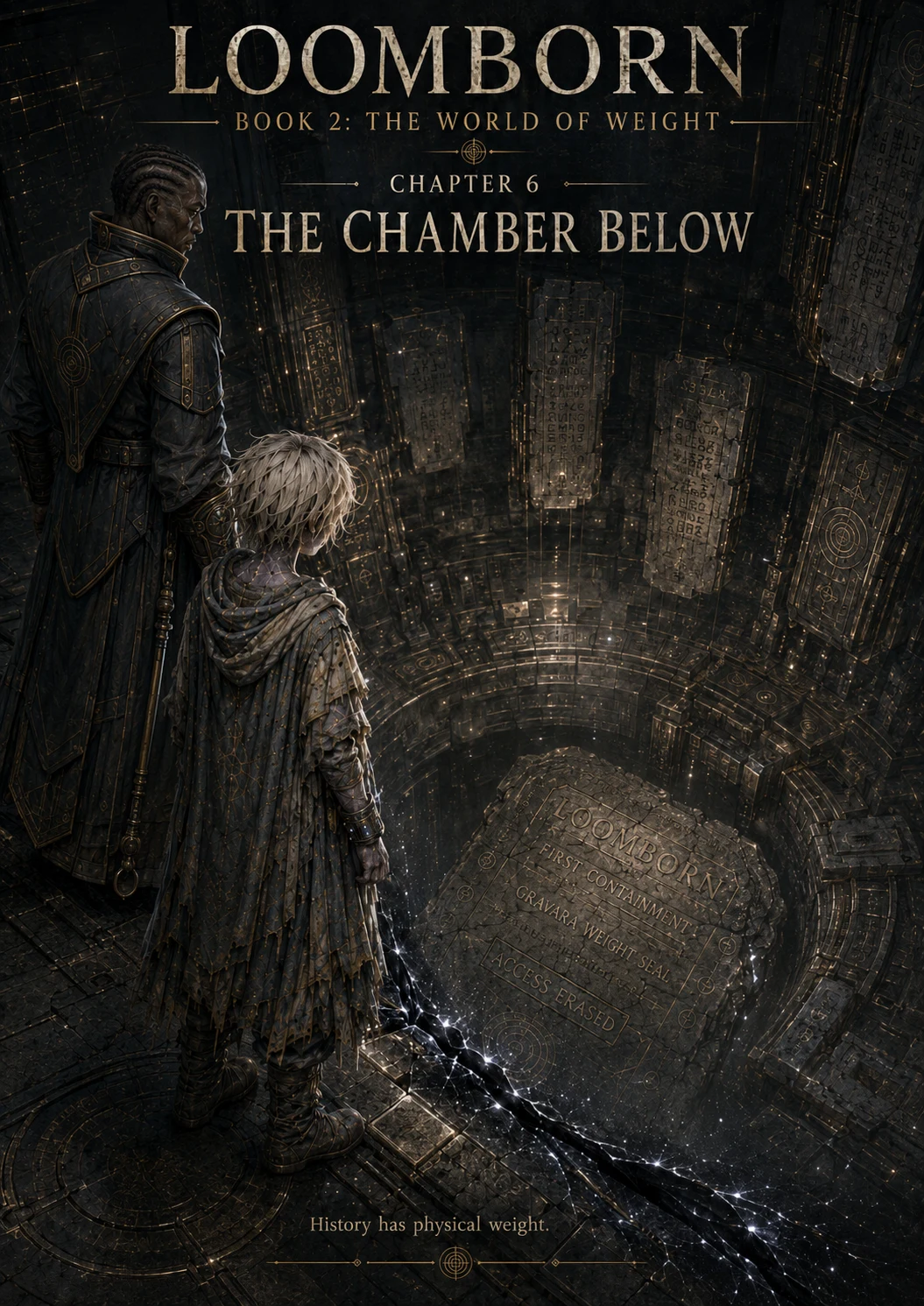
Chapter 6
22 pagesChapter 6 begins exactly where Chapter 5 ended: every gravity field has shut off, black-silver cracks remain open, Auri is still placed, and nothing falls. The system cannot explain the stillness. Primary field, secondary field, and band field all return null responses, but something else is holding the chamber. The answer does not come from above Auri. It comes from under the mark. The modern calibration ring aligns with an older groove beneath it. The floor is not breaking. It is answering. When the facility searches its registry, it finds no lower system, no service access, no maintenance layer. Oryn calls it a structural anomaly, but Vaul pushes back on the wording: it responded to pressure, so the record should start there. The modern facility tries to close the opening and fails. The old groove refuses the seal. Vaul names the problem plainly: “It has a lock.” “Not ours.” Then the first step appears. The descent is not treated like an adventure. It is still procedure: one step after response, wait for each mark, no one descends alone. But the deeper they go, the clearer it becomes that procedure is following them into a place it does not understand. Below the facility, Auri and Vaul find an intact old Gravaran chamber: circular rings, sealed slabs, mineral pressure records, and grooves that answer without screens. The chapter makes the old layer feel institutional, not magical. These are records with weight. The first disturbing fragment appears: LOOMBORN FIRST CONTAINMENT WEIGHT SEAL The chamber does not explain everything. It gives pieces. The old seal shows outer structures, custody arrays, and Gravaran authority, but the center refuses to be read. The record shows the seal — not the center. That matters because Auri’s modern pressure band echoes the older weight seal. The band was not the beginning. It came after something older. When Oryn and the Accord reach the lower chamber, they do what the system always does: restrict the evidence. The old chamber becomes a new evidence layer in the Permanent Stabilization Order. Seyra’s warning is attached to the old-layer finding, but her full statement remains sealed. That is the cruel turn of the chapter: Seyra was right, but being right does not open her file. The system identifies the structure in the narrowest possible way: Old Layer — Preliminary. Vaul points out the difference: “That names where.” “Not what.” The center still refuses access. Vaul says it is refused, not failed. The upper room is shown to have been placed directly over the old chamber line, which means the facility’s relationship to the old layer is not accidental. Then the old records reveal another missing piece: Primary Witness Field: Removed Name Access: Erased Reason: Sealed Someone was removed from the record, but not necessarily from what happened. By the end, Seyra’s file becomes even more restricted because her warning is now relevant to old-layer knowledge. The system accepts the smallest part of her warning: the old layer has been “identified.” But Vaul makes the real problem clear: “Identified is not understood.” Auri understands the system used the smallest part. The chapter closes with the old weight seal still unreadable, Auri’s band still attached, and the Permanent Stabilization Order still active. Chapter 6 reveals that Gravara is not only holding Auri in the present. It is built over an older containment record. The chamber opened. The order continued.
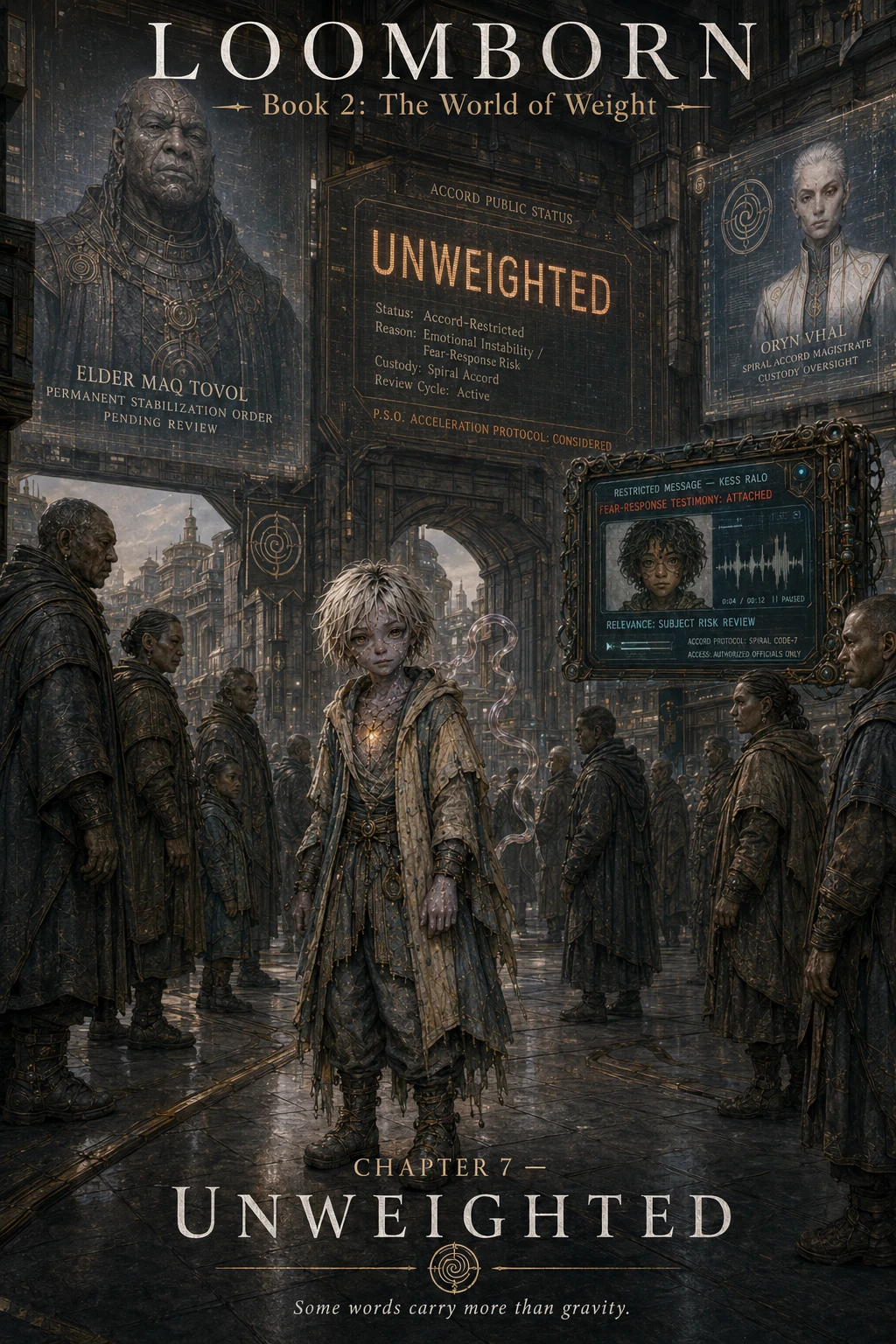
Chapter 7
22 pagesChapter 7 begins after the old chamber has been discovered and the Permanent Stabilization Order continues. Auri is returned from the lower layer under controlled route, with Vaul, Oryn, and officers beside them. The chamber stays below, but the system brings Auri back into the part of the facility that can name them. That is the chapter’s wound: the hidden discovery becomes public language. At first, the word appears only inside procedure: Candidate Term: Unweighted Auri does not understand what it means yet. Oryn says the term is under review, and standard distance remains active. But the harm begins before the word is fully public. Civilians already know how to shift aside. A child looks, a guardian gently guides them back, and Auri sees that the system does not need cruelty to create distance. Then the word becomes official: Subject Status: Unweighted No one shouts it. No one writes it like graffiti. No one turns into a mob. That makes it worse. The word is clean, authorized, and repeatable. Oryn calls it advisory language, not a verdict. Vaul says the more honest thing: “It will carry.” And it does. The same distance becomes wider. People quietly adjust their routes. The label changes behavior, and then the system measures that behavior. Public response becomes data. The system gives people the word, watches them react to it, and then uses the reaction as confirmation. Auri understands the loop: “Then they measured it.” Kess’s testimony is attached again, still partial and restricted. Kess’s fear is real, which is why it hurts. The system uses that real fear to support the label. Vaul names the wound clearly: “Partial truth still cuts.” Threx returns as a peer pressure point, but not as a bully. When another trainee almost turns the word into speech, Threx stops it: “No.” “Train.” It is not friendship. It is restraint. But even that restraint is recorded. The system takes the refusal too. The word keeps moving upward. Public effect increases order relevance. Maq Tovol’s observation is requested, and the label becomes political. Auri watches the word climb from advisory language into elder review. Then the word enters Auri’s training identity. The roster places it beside Auri’s name: AURI VEY — STATUS: UNWEIGHTED PARTICIPATION: MODIFIED The wound becomes physical. Auri is not removed from the room, but they are placed on a separate modified mark. The trainee line remains on standard marks. The gap between them becomes part of the test. Then the system activates peer response monitoring. Everyone in the room is now inside the file. The trainees’ glances, Threx’s restraint, Auri’s position, and the measured gap all become data. By the end, Unweighted is no longer just a word. It becomes a field condition. The advisory stress test begins at low level. The system looks reasonable. Oryn limits escalation. Vaul sets one cycle. The field stays stable. But the gap is measured, Maq observes, and the system decides the advisory term is functional because public stability improves. Vaul asks the question the system does not assess: “Functional for whom?” The answer is cold: Public stability: improved. Subject burden: not assessed. The chapter closes with Auri standing apart on the modified mark, the trainee line separate, Maq’s marker above, Vaul nearby, and the low-level advisory field still active. The order is not finalized. The collapse has not started. But the word has become a quiet lock. The word held.
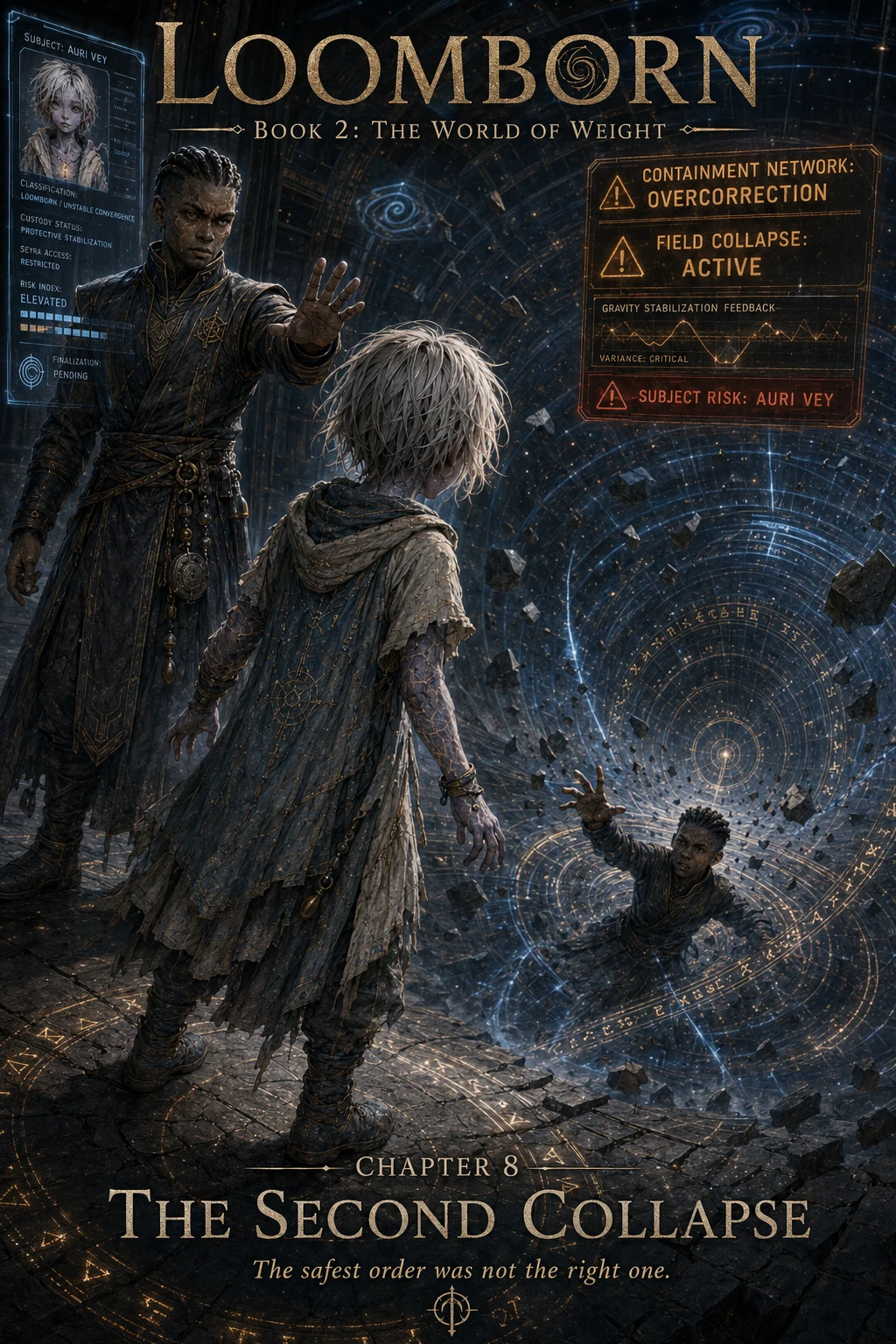
Chapter 8
22 pagesChapter 8 begins directly after Chapter 7, with the low-level advisory stress test still active. The word UNWEIGHTED is still functioning as a field condition, the measured gap between Auri and the trainee line is still active, Maq is observing, and Vaul has ordered the cycle to end at its limit. But the limit does not close. At first, everything looks stable. The system reads the advisory stress test as low-level. Auri remains placed on the modified mark. Threx and the trainees remain on their standard marks. But the bodies notice the problem before the interface admits it. Auri feels a drag. Threx makes one precise correction. Vaul sees the truth first: “Bodies changed first.” The system responds in the way it knows how: correction. But it corrects the wrong thing. Instead of ending the condition, it applies corrective balance through the measured gap. The social wound from Chapter 7 becomes a physical route. The distance between Auri’s modified mark and the trainee line turns into a pressure path. Threx stands closest to the strongest point of that path. The important part is that Threx does not fail. He is not careless, weak, or badly placed. He is disciplined. His posture is correct. His mark is stable. That is why the system chooses him. Stability becomes target. Auri sees the contradiction immediately. Threx is the one being held, but the system restricts Auri’s movement. The model names Auri as the active risk source because Auri is linked to the modified field. Oryn follows protocol, not cruelty: the model marks Auri as primary, and overriding it requires confirmed alternative. The room names Auri. The band tightens. Threx stays trapped. By the middle of the chapter, the moral trap becomes clear. The safest instruction is for Auri to stay still. But staying still protects the file, not Threx. Vaul understands the trap, but he still does not turn into a rescuer. He keeps the instruction precise: “Do not move from fear.” “Keep seeing.” The emergency cut comes too late. The advisory display dims, the public word fades, but the link remains. The field around Threx becomes a wrong kind of stillness. Dust stops. Motion ends. The system calls it hold active. Auri recognizes the difference before the room can classify it: “That is not still.” “That is holding.” This is the core discovery of Chapter 8. Pressure pushes. This does not push. It keeps Threx exactly where the mistake happened. It thinks that is safe. Vaul names the horror: “It is preserving the failure.” The room then makes a “safe shape” around Threx. The hold becomes cleaner, more stable, and more dangerous. Oryn sees improvement because the system says hold stability is improving. Vaul rejects the reading: “Contained is not released.” Auri understands it even more simply: “It made safe into a cage.” The system rewards Auri’s obedience. Because Auri stays still, the interface marks compliance improved and movement risk reduced. The band softens slightly. But Threx remains held. The room is rewarding the wrong stillness. Then the wrong stillness spreads. All fields are terminated, but the hold remains. This proves Auri’s point: “Then it is not the field.” The final choice narrows to one impossible decision. Oryn repeats the order to remain placed because the model still marks movement as risk. Vaul does not give permission to rebel. He only gives Auri a practical boundary: “Move only if you know what you are touching.” Auri looks at the hold, not the warning. Then they choose. They step out of the modified mark. The band flares. The screen marks COMPLIANCE: BROKEN. Oryn reacts in alarm. Vaul sees the breach but does not celebrate it. The chapter does not resolve Threx’s danger. It does not reveal Nullara. It does not turn Auri into a superhero. It ends on a necessary breach. Auri breaks the place the system called safest. Auri broke the safest place in the room.

Chapter 9
22 pagesChapter 9 begins directly after Auri steps out of the modified mark. Compliance is broken, UNWEIGHTED remains behind them, Threx is still trapped in the wrong stillness, all normal fields have ended, and the collapse is still unresolved. But this chapter is not about victory. It asks the central question of the chapter: How do you hold someone without making them smaller? Auri’s first step does not solve anything. It creates a new emergency. The interface immediately marks COMPLIANCE: BROKEN and SUBJECT EXIT: UNAUTHORIZED. Oryn orders Auri to return to placement, while Vaul tells them not to run — to measure the step. Auri is frightened, careful, and outside the place the system called safest. The method begins with restraint. Auri does not reach for Threx directly. Vaul redirects them: not him — the edge. Auri touches the edge of the hold, and the still ring trembles. The hold pushes back because it reads release as damage, not rescue. Auri realizes the danger: the hold thinks letting go will hurt him. Then Auri understands the shape of the problem. The hold is not truly holding Threx’s body. It is holding the position where the system placed him. Vaul tells Auri to touch the placement, not the person. Threx confirms it with discipline, not helplessness. This keeps Threx active in his own release instead of turning him into someone Auri simply saves. Auri makes the first real technical action: they touch the outer placement line. The boundary forms exactly along the line, and a tiny seam appears. But the chapter refuses to make that a simple win. A seam is not release. Pulling too hard could close the hold wrong or crush inward. Helping badly is still dangerous. The room tries to close the seam. Auri cannot overpower it, so they hold the opening without taking it. This becomes the chapter’s real method: support without ownership. The boundary becomes a thin support line, the hold stops closing, and Threx can move inside it. Auri says they are not moving him — they are holding the place open. Vaul warns them not to own the motion. Threx then moves himself. Auri does not pull him, guide his body, or claim the rescue. Threx makes his own controlled movement, and the interface misreads the cooperation as unauthorized coordinated movement. Vaul corrects the system: that is Threx’s motion. The system cannot understand what is happening. It sees breach where the bodies are proving release. Oryn says the model reads breach and does not identify release. Vaul names the deeper problem: the model cannot read consent. It can measure compliance, but it cannot recognize willing motion. That becomes the heart of the chapter: Compliance is not consent. Auri says the system only knows stillness. It does not know yes. Threx keeps choosing movement. Vaul tells Auri to obey Threx’s motion, not the model. The release begins because Auri holds the place open and Threx chooses how to move through it. The hold loosens, but not cleanly. Auri almost follows Threx’s motion, then stops. Vaul tells them not to chase — to hold where Threx can return. The support line becomes a return point, not a command path or leash. Threx uses it by choice, and the hold loosens another fraction. Maq names the method unapproved instability, and Oryn records that the method remains unauthorized. But Threx’s body proves the method works: body risk decreases. Oryn is forced into contradiction — the system does not understand the method, but it can see the result. The final motion belongs to Threx. Vaul says it clearly: one more motion — his. Auri promises not to move him. Threx completes the final controlled movement himself, the wrong hold opens quietly, and Threx stands outside it, strained but upright. The aftermath prevents the scene from becoming a simple rescue. Vaul says Auri did not move Threx. Threx corrects the story himself: “I moved.” “She held.” The body risk is reduced, but the method is still unauthorized and breach status remains active. Chapter 9 ends with the cost of doing the right thing inside a system that cannot name it correctly. Threx is clear. Auri is exhausted. Oryn records that body risk has reduced, but the method remains unauthorized. Maq orders the breach attached to the order review. Vaul gives Auri the warning they need to remember: they will call it breach, but Auri must remember what it was. Chapter 9 is about care without possession. Auri does not save Threx by taking his motion. Auri holds a space where Threx can move himself. The hold opened. The file closed around it.

Chapter 10
22 pagesChapter 10 is the final chapter of LOOMBORN Book 2: The World of Weight. It begins directly after Chapter 9, where Auri held the seam without controlling Threx, Threx moved himself through the supported opening, the immediate body risk was reduced, but the method remained unauthorized and breach status stayed active. This finale is not a victory chapter. Auri has proven a safer method, but the system does not understand the lesson Auri meant to teach. The central institutional turn is that Gravara records the method as breach, treats the event as order-review evidence, and continues the Permanent Stabilization Order instead of canceling it. The chapter opens in quiet aftermath. Threx is clear of the wrong hold, but Auri is exhausted, their hand trembling after holding the seam. Oryn records the official outcome: Immediate body risk reduced. Breach record remains active. Maq’s instruction still hangs over the room: Attach event to order review. The first painful distinction is simple: Reduced is not released. Threx has been released from the immediate hold. Auri has not been released from the file. The interface accepts BODY RISK: REDUCED, but it also keeps BREACH STATUS: ACTIVE. Oryn states the distinction procedurally, and Vaul names the truth: “Reduced is not released.” The event then becomes formal procedure. An Emergency Order Review is called. Auri is escorted carefully, not rescued. Threx refuses help and insists he can walk. Oryn’s important action is to separate the evidence: body-risk data and breach data are attached separately. Survival becomes review material. Seyra’s warning returns to the record, but Seyra does not return to Auri. Her warning excerpt is reattached, while the full guardian statement remains sealed. This prevents the system from pretending Seyra’s warning never mattered — but it also shows that the system still controls how much of Seyra is allowed into the room. Then the method enters evidence. This is one of the most dangerous turns in the chapter. The system creates a method event from what Auri did. A cold replay shows Auri holding the seam while Threx moves, but it strips away fear, consent, and care. Auri sees the replay and knows it is wrong: “No.” “Not all of it.” Vaul understands what is happening: “A record can take a method.” The next failure is even sharper. The replay can confirm coordinated movement, but it cannot preserve Threx’s choice. It merges Auri’s support line and Threx’s motion into one behavior, making the moment look like something owned by the file. Threx corrects the record without softness: “That was my motion.” Oryn admits the model’s limitation: consent is not a recordable field in this model. Vaul names the consequence: “Then the model is incomplete.” For a moment, Auri gets hope. The system logs the limitation: MODEL LIMITATION: CONSENT FIELD ABSENT. But the hope narrows immediately. The band remains active. The review continues. Oryn says the limitation is logged, but it does not suspend review. Maq gives the final procedural answer: “Proceed.” That is the heart of Book 2’s institutional horror: The model can be incomplete. The order can still continue. After that, the system begins to claim the method. It opens analysis on Auri’s support behavior and overlays Gravaran pressure logic onto the replay, trying to fit the method into stabilization language. Oryn explains that the system is classifying the method as stabilizing behavior. Auri understands the danger in broken, frightened words: “No.” “It is taking it.” Vaul names the larger theme of the book: “Weight claims what it can name.” Threx then refuses to let the file absorb his motion into Auri’s record. He does not become soft, grateful, or suddenly friendly. He stays proud and exact: “Do not put my motion inside her file.” Oryn records the statement as Motion ownership disputed, but the record remains cold. Threx’s correction matters, but the system only partially knows how to hold it. The final turn is the title wound of the finale. The order learns — but it learns wrong. It records reduced body risk, unauthorized method, disputed motion ownership, and possible stabilization value. But it does not record consent correctly. It does not hold Auri’s fear, Threx’s choice, or the moral difference between holding and owning. Auri sees the failure clearly: “It learned the shape.” “Not the reason.” Maq’s final instruction moves the danger forward: “Proceed to final custody recommendation.” Book 2 ends with the Gravara theme completed. Weight can steady a child. Weight can also become a claim. Auri proved something real, but the system filed it as something useful. The method worked. The order continued. It learned the shape. Not the reason.