PanelVerse
Original comics and manga
Browse illustrated fiction built for focused reading across phone, tablet, and desktop.
PanelVerse
Browse illustrated fiction built for focused reading across phone, tablet, and desktop.
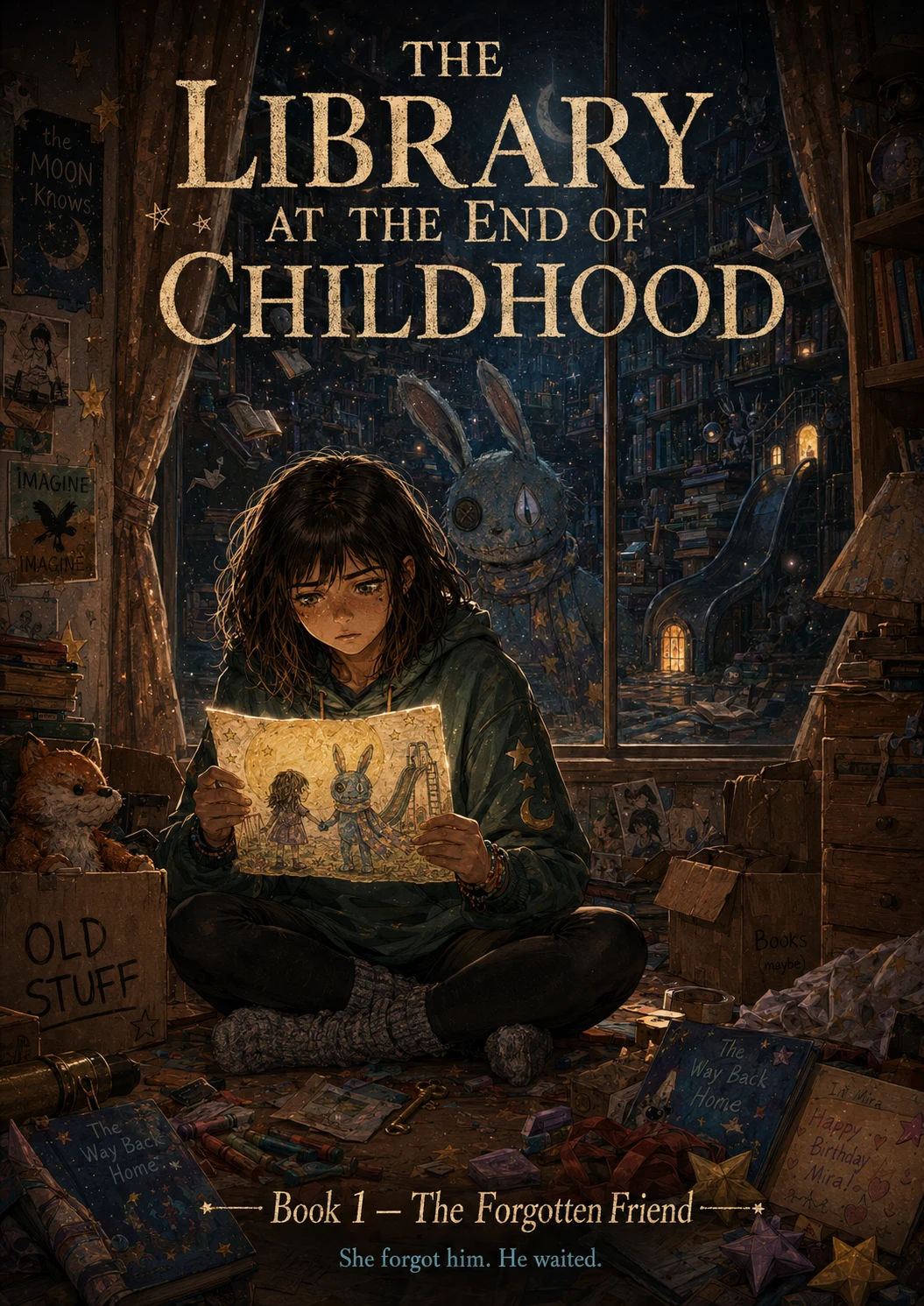
The Library at the End of Childhood
The Library at the End of Childhood begins with Mira Vale, a lonely teenage girl who is packing up her childhood bedroom before moving away. While sorting through old boxes, she finds a faded drawing of herself holding hands with a strange little imaginary friend she no longer remembers. That night, the forgotten friend appears in her window reflection and says: “You promised you would come back.” Mira follows him through a hidden door behind an abandoned playground and enters a magical library where forgotten childhood things are kept alive: imaginary friends, bedtime stories, lost toys, unfinished drawings, dreams, fears, and promises children made before they grew up. But the library is not safe. Imaginary friends who are forgotten too long begin turning into twisted creatures called Abandoned Ones. Stories are rewriting themselves. Old childhood heroes are becoming villains. And Mira’s forgotten friend, Nono, may be hiding a painful truth about why he waited for her all these years. As Mira explores the library, she must face the memories she left behind and uncover the secret of why forgotten friends are becoming monsters. By the end of Book 1, Mira learns that growing up does not destroy childhood magic. Forgetting it does.
Reading order
10 readable
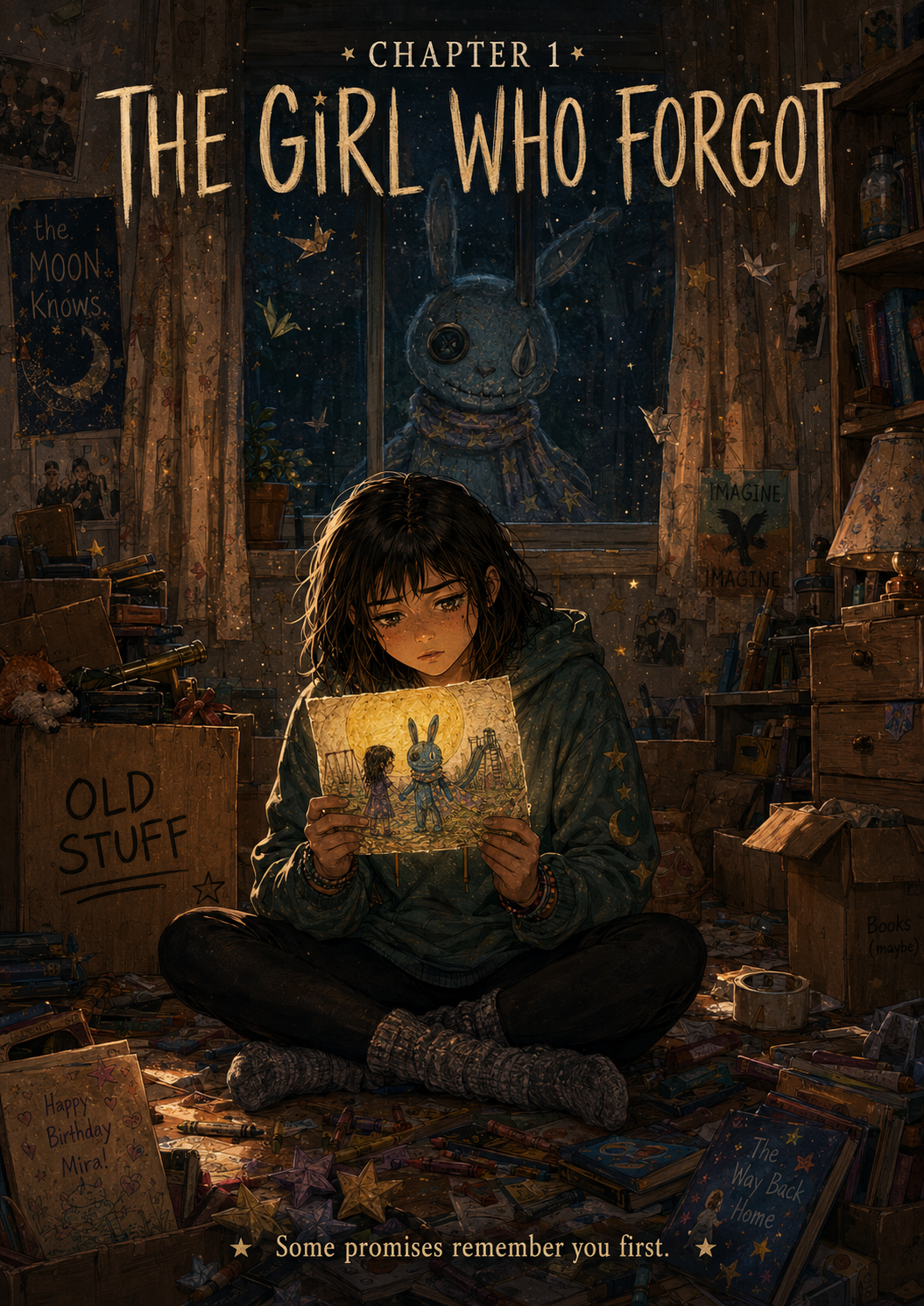
Chapter 1
20 pagesMira Vale is packing up her childhood bedroom before moving away when she finds an old drawing she does not remember making. The drawing shows little Mira standing beside a strange blue rabbit-like imaginary friend named Nono. At first, Mira thinks it is just an embarrassing childhood memory, but her mother confirms that Nono was once very important to her. Mira used to talk to him every day, especially when she felt lonely or scared. That night, Nono appears in the reflection of Mira’s window. He is not fully in the real world, but he remembers her clearly. Mira tries to convince herself it was only a dream, but the next morning the drawing has changed. New words appear under the old promise: YOU PROMISED. Small impossible things begin happening around the house. A mark appears on the mirror. A spoon moves by itself. The box labeled OLD STUFF whispers Mira’s name. As Mira investigates, forgotten memories start returning. She remembers being a little girl, afraid of the dark, and Nono staying beside her. She learns that Nono came from a mysterious place called The Library at the End of Childhood, where forgotten things wait. By night, Mira follows Nono’s clues back to the old neighborhood playground. Beneath the red slide, the hidden door from her childhood drawing appears. Nono waits for her there. The chapter ends as the door opens, revealing the magical Library beyond. Mira has forgotten Nono. But the Library remembers her.
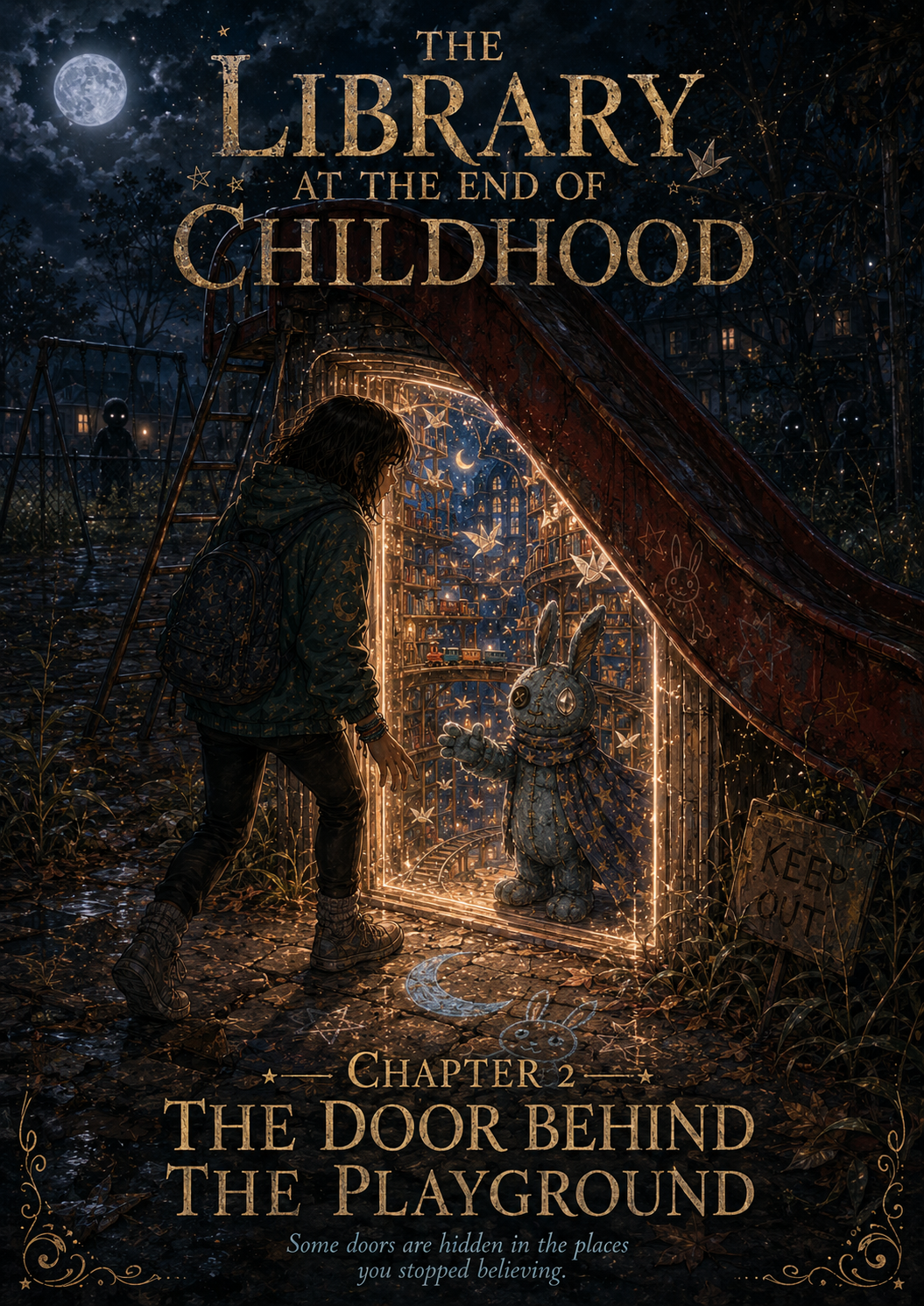
Chapter 2
20 pagesMira steps through the glowing door beneath the old red slide with Nono. Inside, she enters a strange passage between the real world and the Library. The path is made of old story pages, floating toys, paper birds, and memories children left behind. Nono warns her not to look back too long, because doors in this place can sense doubt. As they travel deeper, Mira realizes something is following them. Shadowy forgotten things move through the darkness behind them, drawn to her because she is a child who has started remembering. Nono leads Mira onto a small suitcase-boat that carries them across a dark glowing river full of lost stories. Under the water, Mira sees memories from childhood — including moments she shared with Nono. But then a strange childlike thing rises from the river and calls her old nickname, Mimi. Nono warns her not to answer. In the Library, names have power. Mira and Nono finally reach the massive gate of the Library, where they meet The Archivist, the ancient keeper of the Library. The Archivist reveals that Mira has been to the Library before many times, starting when she was four years old. But the gate refuses to open because something dangerous followed them through the threshold. A river creature tries to take Mira’s name, but The Archivist forces it back. Before it disappears, a small wet scrap secretly slips into Mira’s backpack. The Archivist warns Mira of the first rule: Nothing forgotten is harmless. When the gate finally opens, Mira sees the full Library at the End of Childhood — endless shelves, floating books, toy trains, glowing doors, paper birds, and imaginary friends hiding everywhere. Then Mira finds her record on the Wall of Returned Children. It says she returned after a long absence. And underneath her name is a warning: WATCH CLOSELY. The chapter ends when a chained shelf growls, and something inside the Library begins to wake up.
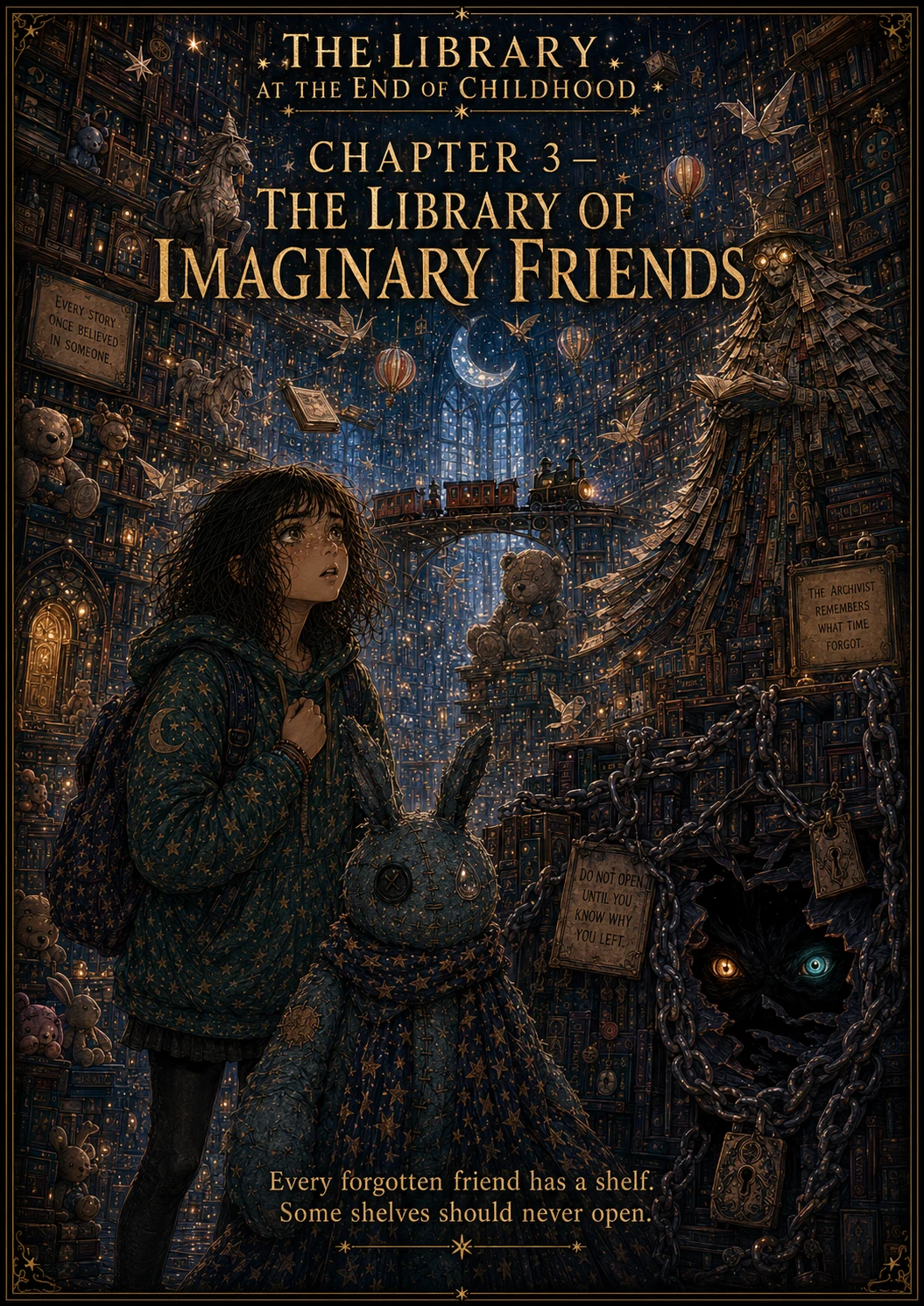
Chapter 3
20 pagesMira finally sees the Library for what it really is: a massive, magical place where imaginary friends, childhood memories, forgotten toys, drawings, promises, and old feelings are kept. The Library is beautiful, but it is also wounded. Mira and Nono move deeper inside with The Archivist, and Mira begins to understand that imaginary friends do not simply disappear when children grow up. They remain in the Library, waiting on shelves connected to the children who once loved them. Some are still gentle. Some are sad. Some have been forgotten for so long that they have become dangerous. Mira sees chained shelves and hears warnings about the Unshelved — imaginary friends who lost their names, their children, or their memories. One of them recognizes Nono and calls him the “star-blanket boy,” proving Nono has been known in the Library for a long time. Eventually, Mira reaches Nono’s own shelf. It is small, blue, and covered with pieces of their childhood: faded yellow stars, strawberry candy wrappers, paper stars, the old yellowed drawing, and cracks from all the years Mira forgot him. As Mira touches the objects on the shelf, memories return. She remembers the blanket fort. The thunderstorm. The flashlight. The cardboard crown. The way Nono helped her feel brave when she was little. For the first time, Mira truly remembers that Nono was not just pretend to her. He mattered. Her memories begin to heal his shelf, and Nono becomes stronger and more real. But remembering has consequences. As Mira’s memories wake Nono, they also wake something else in the Library — a forgotten creature made from scraps, hunger, and old pain. The chapter ends with a warning: Mira’s remembering can heal. But it can also call back the things that were left behind.
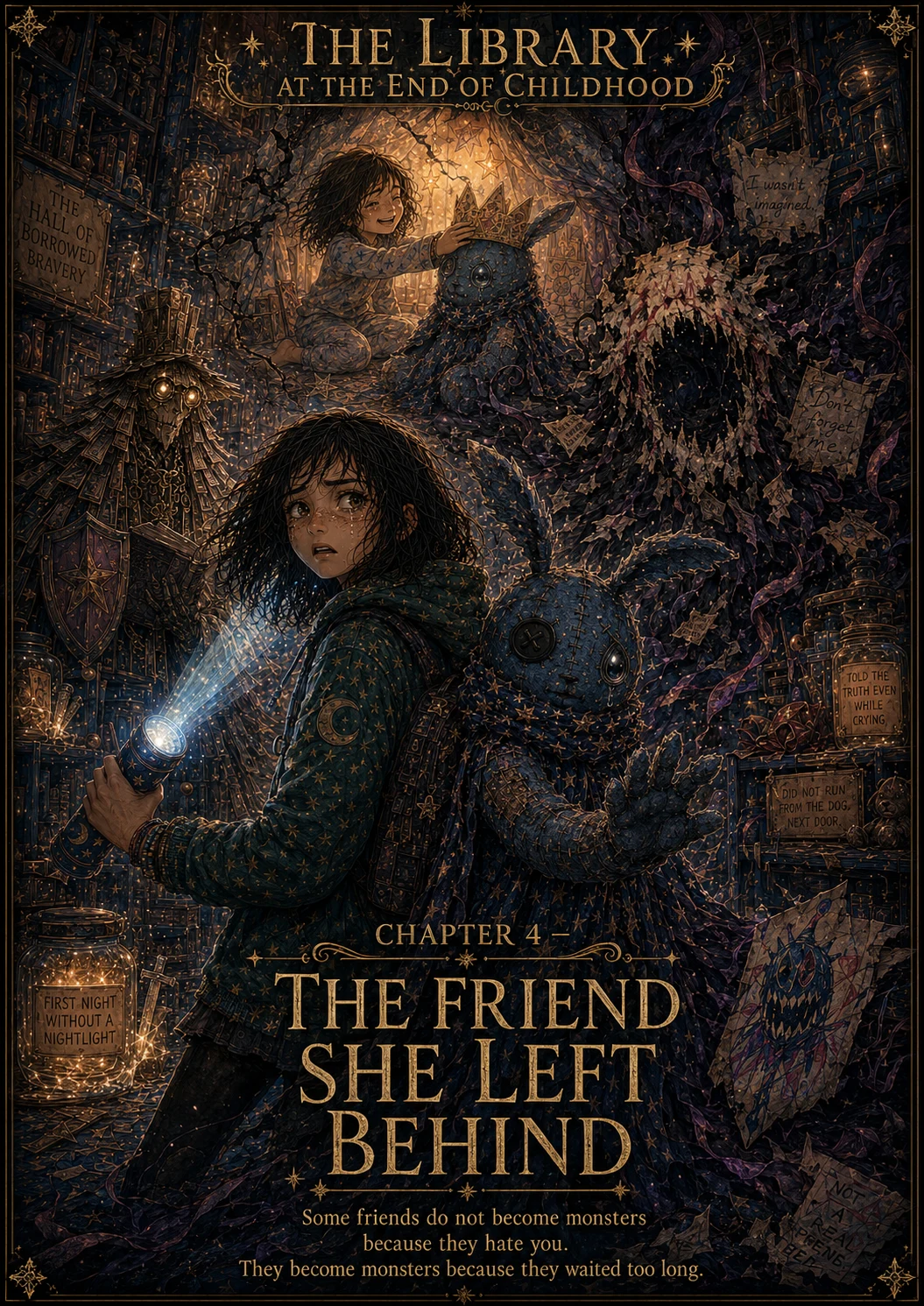
Chapter 4
20 pagesChapter 4 takes Mira deeper into the emotional truth of what happened between her and Nono. After Mira’s memories begin waking the Library, a forgotten creature starts following her. To escape it, Mira and Nono are forced into the Hall of Borrowed Bravery, a place where old childhood courage and broken promises become real. Inside, Mira relives the memory she has avoided. She remembers being little and scared. She remembers building the blanket fort with Nono, giving him the cardboard crown, and calling him the king of the brave. She also remembers making a promise to come back to him. But as Mira grew older, she slowly stopped visiting. Nono waited for her under the playground slide again and again. He believed she would return because she promised. At first, he thought she was just late. Then days became months, and the waiting changed him. The chapter reveals that Nono was not simply sad after Mira forgot him. He almost became something dangerous. His loneliness turned into hunger. His shelf cracked. His memories became painful. But even when he was close to breaking, he protected the last drawing that remembered Mira. Mira finally understands that forgetting Nono did not just erase a childhood game. It hurt someone who had loved her and waited for her. She apologizes, but Nono tells her the hard truth: Sorry is not a door. That line becomes the emotional center of the chapter. Mira’s guilt matters, but guilt alone cannot fix what happened. She has to do more than feel bad. She has to choose what comes next. By the end of the chapter, the wound between Mira and Nono is open, honest, and painful. But that honesty also makes them vulnerable. The forgotten creature uses their emotional fracture to get closer. Chapter 4 ends with Mira realizing that the Library is not only full of magic — it is full of old pain that still wants to be remembered.
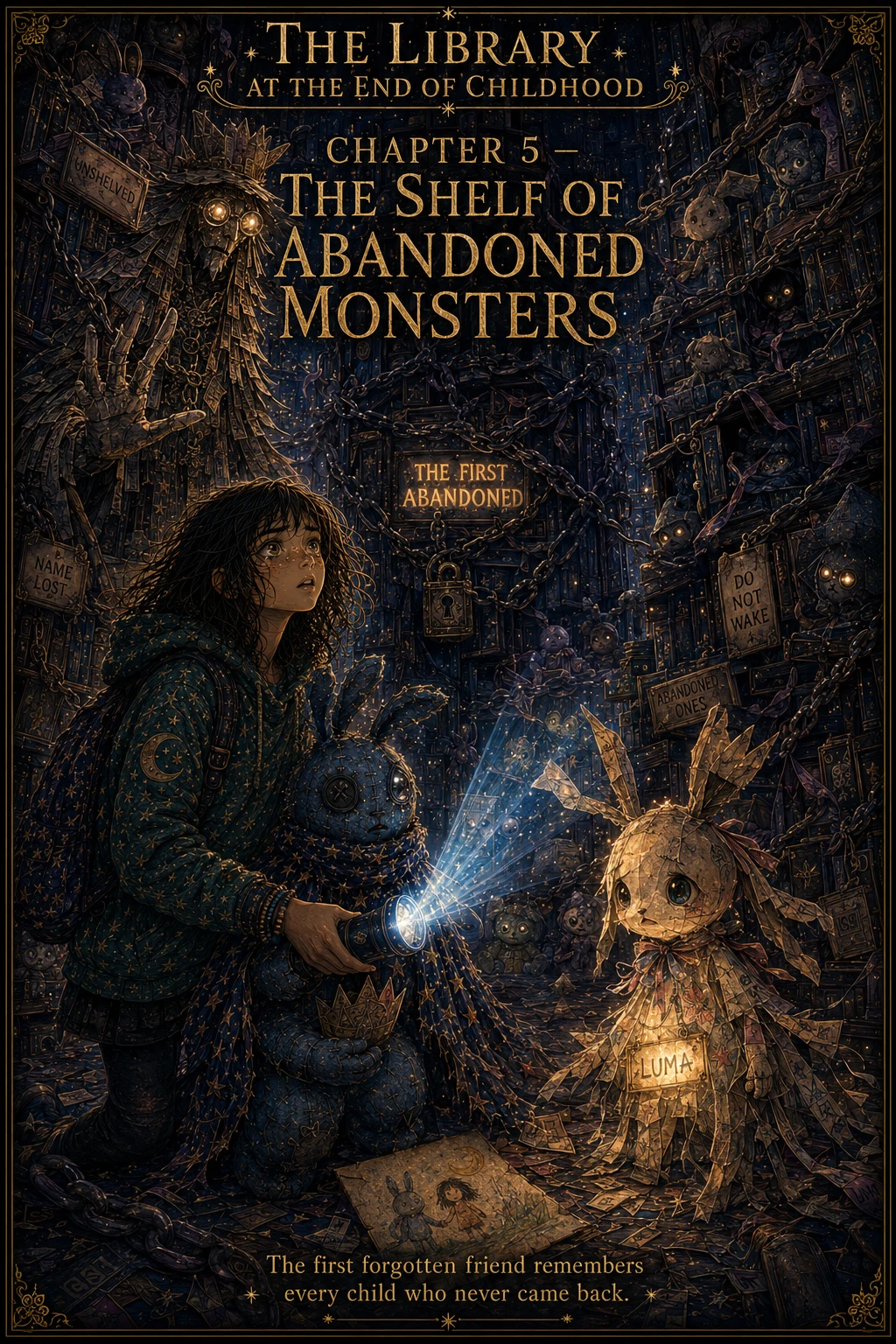
Chapter 5
20 pagesChapter 5 reveals that the forgotten creature following Mira was once an imaginary friend named Luma. After Mira’s truth-light reaches her, Luma begins to change from a frightening scrap-creature into a fragile glowing paper-lantern friend. She is not evil. She is hurt, confused, and desperate to know why she was forgotten. Luma’s name awakens the deepest and most forbidden shelves in the Library: The Shelf of Abandoned Monsters. Mira, Nono, The Archivist, and Luma enter the aisle where the Library keeps imaginary friends who were forgotten for too long. At first, they look like monsters, but Mira learns the truth: many of them were once protectors, knights, comforters, and childhood companions. They did not start dangerous. They became dangerous because they were left without answers. Inside the forbidden aisle, they encounter figures like Sir Scratch, Ribbon-Bird, and other abandoned friends. Their shelves are chained, their names are damaged, and their records are incomplete. Then Luma’s own past begins to surface. The Library claims Luma was the First Abandoned, but her shelf reveals something impossible: her child may have come back. A voice from the oldest shelf says: “Luma, I came back.” This changes everything. Mira realizes Luma may not have been abandoned at all. Her child returned after morning, but the old Library rules had already closed the door. The record marked Luma as abandoned, and someone erased the child’s name. With Mira’s truth-light, the hidden name appears: Elian. But black ink immediately tries to erase it again. This is the first clear reveal of a deeper enemy beneath the Library: The Quiet Index. The Quiet Index is not just forgetting. It is choosing what the Library is allowed to remember. It hides painful truths, erases names, and protects old rules even when those rules are wrong. Chapter 5 ends with the Quiet Index opening a hidden staircase beneath the Library and pulling Mira downward. The chapter’s biggest truth is that some “abandoned” friends were never truly abandoned. They were erased by the system.
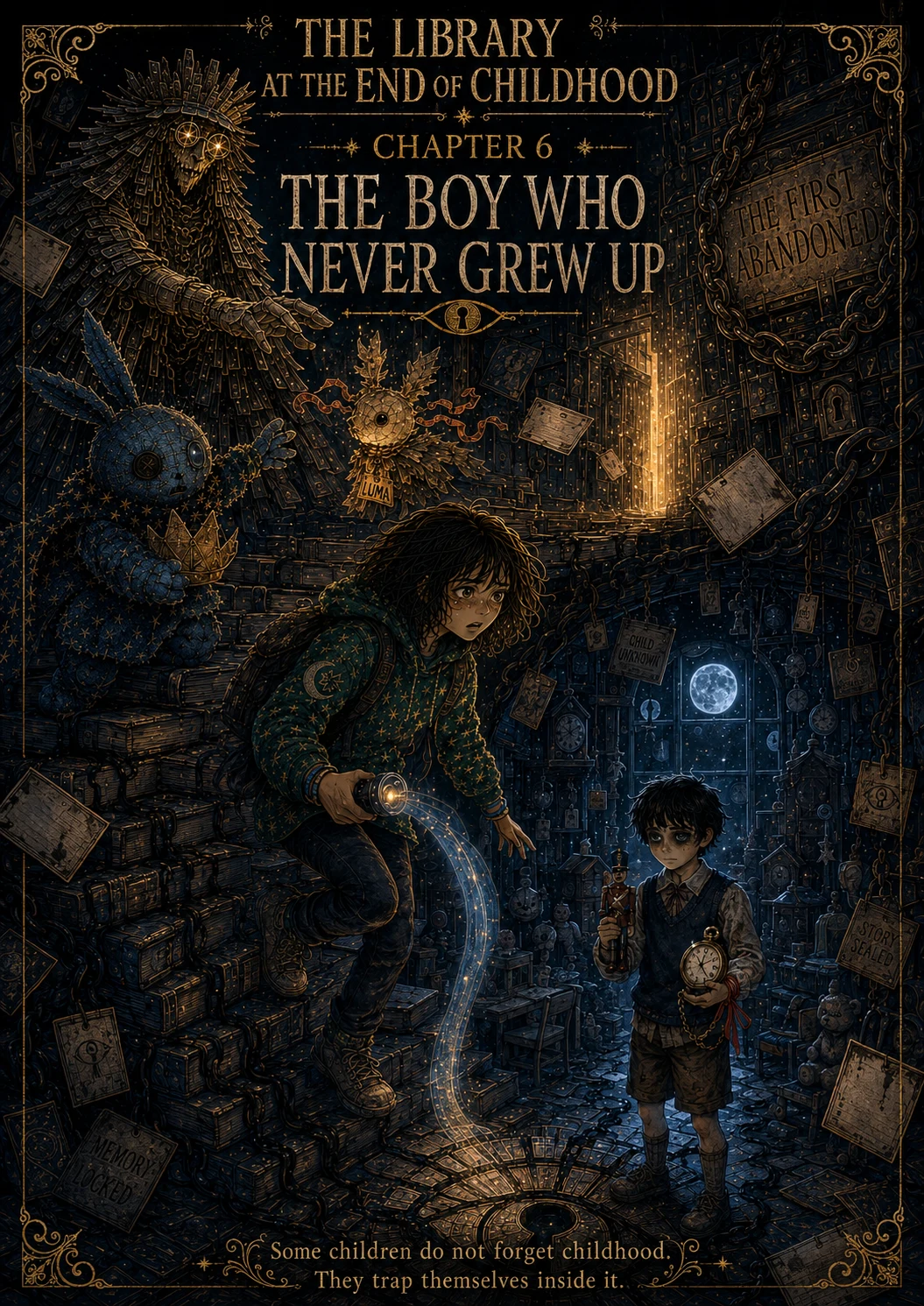
Chapter 6
20 pagesChapter 6 begins immediately after Mira is pulled beneath the Library by the Quiet Index. She falls into a hidden archive below the Library, a cold silent place made of closed books, blank catalog cards, erased names, stopped clocks, and sealed records. Nono, Luma, and The Archivist are left above, unable to reach her because the Quiet Index blocks normal Library magic. At the bottom of the staircase, Mira meets Rowan, a mysterious boy who looks around 10 to 12 years old but has eyes that seem much older. He lives in a room full of stopped clocks, unmelted birthday candles, old school desks, and ghostlike children. Rowan explains that Mira is a remembering child — the kind the Quiet Index cannot fully erase. At first, Rowan seems like a guide, but Mira quickly realizes he is also trapped. He knows a way out of the Library, but he cannot leave because he cannot face what he left behind. Through flashbacks, Mira learns Rowan’s story. Rowan was once a real child who found the Library and chose to stay because going home meant growing up. He refused the morning door back to real life. But by choosing to stay, he trapped his imaginary friend, Pip, a loyal tin soldier friend. The Quiet Index helped Rowan erase the guilt, but it also erased Pip’s name from his memory. Mira uses her truth-light to help Rowan remember. When Pip appears again, Rowan finally confronts the pain he buried. He apologizes, and Pip tells him not to ask to forget him again. This causes time to move in Rowan’s chamber for the first time. His cracked pocket watch begins ticking, and a morning-light door appears. Meanwhile, above the sealed staircase, Nono refuses to simply wait again. With Luma and The Archivist’s help, he uses Mira’s cardboard crown and Luma’s returned name to open a crack back to Mira. Mira escapes upward, but Rowan remains below, afraid to step through the door. The chapter ends by revealing the deeper law that controls the Library: Every child must leave. Every friend must stay. Chapter 6 is about fear of growing up, the danger of forgetting guilt, and the truth that comfort without change can become a cage.
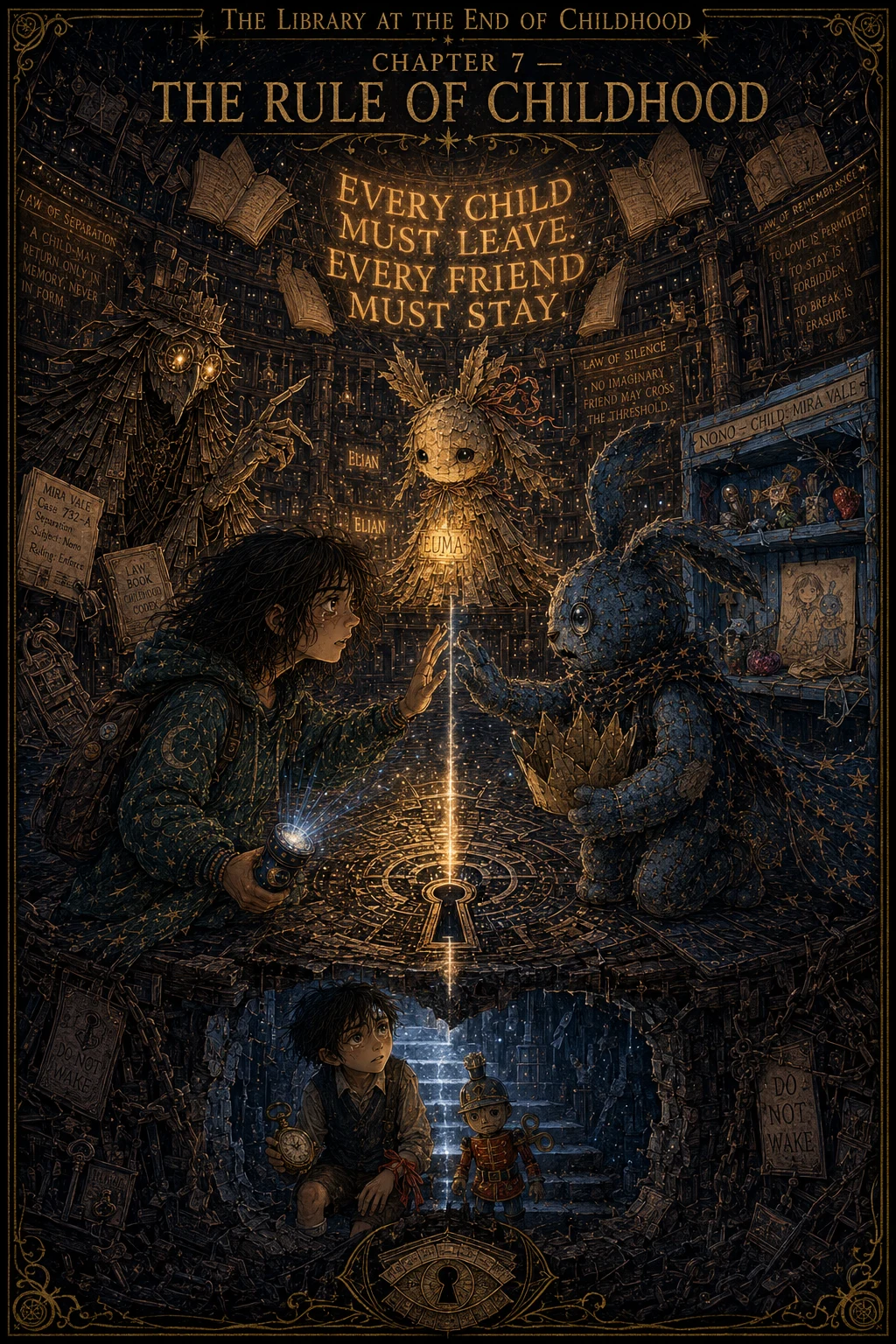
Chapter 7
20 pagesAfter Mira escapes from beneath the Library, she and Nono enter the Hall of Childhood Law, a huge magical courtroom-library chamber where the rules of childhood are written into the walls. The law shows Mira painful memories of children leaving the Library while their imaginary friends remain behind on shelves. At first, The Archivist explains that the law was created to protect children. Before the law, some imaginary friends loved their children so much that they tried to keep them from growing up and returning to real life. But the law went too far. It protected children by trapping the friends. Mira sees how cruel this is, especially for Nono. His shelf was not a home to him. It was a room with no door. Nono admits that he became good at pretending he was okay waiting there. Luma then challenges the law by proving that Elian came back. For one moment, the wording of the law flickers, showing that the rule may not be absolute. The Quiet Index interferes and tries to force Mira to obey the old rule. It creates a wall between Mira and Nono, placing Mira on the side of the real-world door and Nono on the side of his shelf. Mira refuses to accept the choice. Instead of fighting the law with force, she questions its wording. She realizes the law says children must leave, but it does not say children must forget. The Archivist reads the original version of the law and discovers it was changed. The original law was: Children must return to life. Friends must return to shelves. The Quiet Index narrowed the meaning into something colder: Every child must leave. Every friend must stay. Mira understands that the law was edited from guidance into exile. Rowan also begins to choose differently below the Hall. With Pip beside him, he takes his first steps toward the morning-light door, accepting that growing up is scary but still necessary. Mira then makes a new promise to Nono. She does not promise to stay a child forever, because that would be impossible. Instead, she promises something more honest: She will not pretend Nono did not matter. That truthful promise breaks the wall between them. The law changes again: Every child must return to life. Every friend must keep a place. Nono’s shelf becomes a place instead of a prison. A small door appears on it, proving that the Library itself has begun to change. Chapter 7 ends with hope, but also danger. Changing the law wakes the stories built around it, and the next threat appears in the Storybook Wing. The main meaning of Chapter 7 is that growing up does not have to mean erasing what helped you survive childhood.
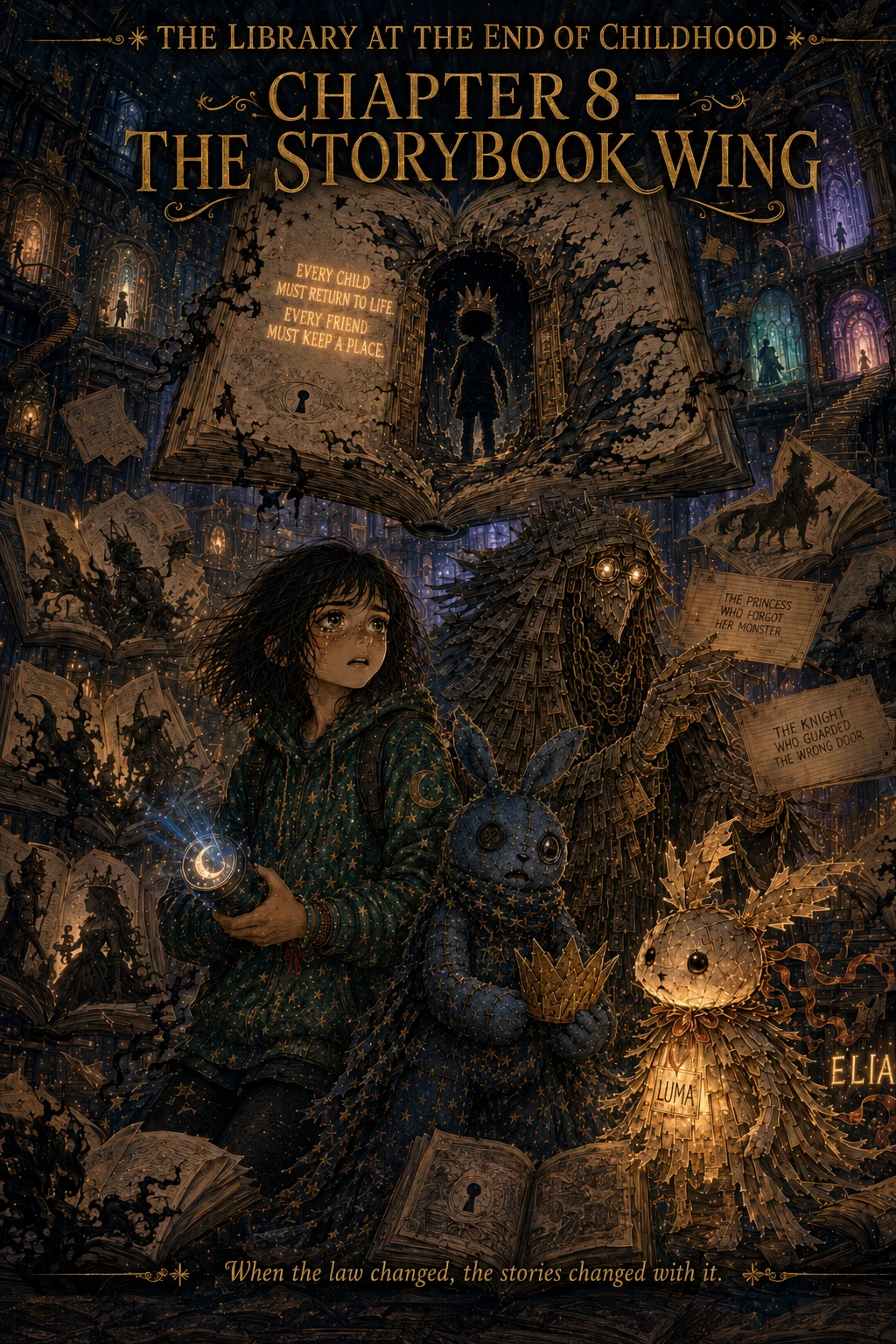
Chapter 8
20 pagesChapter 8 begins after Mira changes the old Library law. Because the law changed, the stories built around that law begin to react. Mira, Nono, Luma, and The Archivist enter the Storybook Wing, a magical part of the Library filled with floating fairytale books, living story worlds, paper bridges, golden stairs, and glowing doors. But something is wrong. The stories are rewriting themselves. Guardians are becoming monsters. Protectors are being turned into villains. Lessons about trust are becoming lessons about fear. The group enters the first corrupted tale: The Princess Who Forgot Her Monster. Inside the story, they find a paper fairytale kingdom with a frightened princess in a tower and a huge wolf-like creature waiting below. At first, the story says the wolf is a monster. But Mira realizes the wolf is not trying to hurt the princess. He is trying to protect her. His true name is Bramble, and he was once the princess’s night guardian. He stayed outside her window every night to keep the darkness away. But the story was rewritten so the princess would fear him instead of remember him. A hidden writer with a black quill is actively changing the story from outside the page. The quill tries to force Bramble into the villain role, making him look dangerous even though his heart is still protective. Nono understands Bramble’s pain because he also knows what it feels like to be hurt, misunderstood, and almost turned into something frightening. Nono stands beside Bramble and says the chapter’s most important truth: Hurt is not the same as evil. Luma uses her warm light to reveal Bramble’s hidden name and the original story beneath the false one. The princess remembers that Bramble was never her enemy. He was the one who waited between her and the dark. When the false ending tries to make Bramble attack, he refuses. Instead, he destroys the rewritten sentence and restores the real meaning of the story. The title changes back from The Princess Who Forgot Her Monster to The Princess and Her Night Guardian. The tale is healed, but the bigger mystery grows. The group sees the true source of the corruption: a child-sized figure holding a giant black quill. This figure is rewriting stories to control what children and imaginary friends are allowed to become. Chapter 8 ends with the figure opening the way to The Author’s Room, where the group must confront the one changing the stories. The main meaning of Chapter 8 is that being wounded does not make someone evil, and sometimes the “monster” in a story is really the guardian someone forgot how to trust.
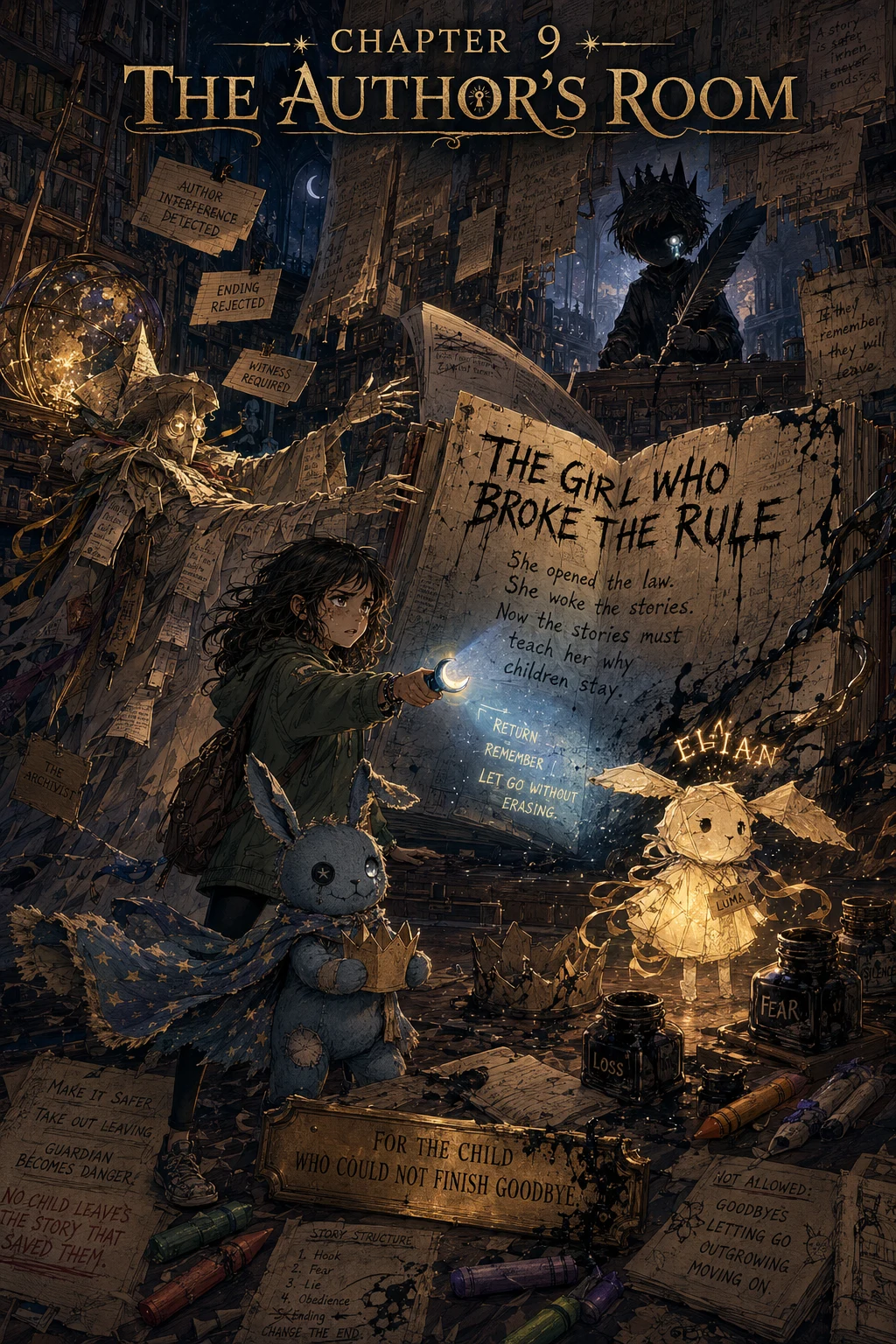
Chapter 9
20 pagesChapter 9 reveals who has been rewriting the stories in the Storybook Wing. After healing Bramble’s corrupted tale, Mira, Nono, Luma, and The Archivist chase the child with the black quill into The Author’s Room, a strange tower filled with unfinished books, rejected endings, crossed-out lessons, and rewritten story pages. Inside, they discover that the corrupted stories were not random. Someone has been changing endings on purpose. Stories where children returned home were crossed out. Stories where friends stayed in memory were rejected. Stories with goodbyes were rewritten into traps. The hidden author does not want children to leave the stories that once saved them. At first, the figure seems like the enemy. But Mira slowly realizes the truth: this child is not rewriting stories out of cruelty. They are rewriting them out of grief. The child’s name is revealed as Aster. Aster is a lonely, wounded child who could not finish goodbye. Aster lost someone important and began using stories to avoid endings, doors, and leaving. To Aster, a painful ending felt unbearable, so they tried to create stories where nobody had to leave. But the black quill is connected to the Quiet Index. Aster began the revisions, but the Quiet Index used Aster’s grief to make the stories colder, harsher, and more controlling. The quill feeds on fear, loss, shame, and silence. When Mira gets too close to the truth, the quill writes her into a new manuscript called: The Girl Who Broke the Rule It tries to trap Mira in a “safe” story-room where nobody leaves, nothing changes, and Nono becomes a fake perfect version of himself. Mira rejects it because she understands that false comfort is still a cage. Nono steps into the story with her, refusing to let the manuscript define him as “the friend who could not let go.” Together, Mira and Nono begin to break the false story from inside. Luma reveals Aster’s name, and Aster finally steps out of the shadows. Instead of attacking Aster, Mira tries to understand them. She tells Aster that stories did not hurt them by ending — they hurt because nobody helped them survive the ending. That truth begins to change the manuscript. But then the Quiet Index takes control of the quill. The ink wells of fear, loss, shame, and silence crack open, creating storyfire — a magical fire that burns through rewritten endings and releases hidden memories. Chapter 9 ends with the Author’s Room catching fire. Aster joins Mira’s group, realizing they must help fix what was edited. The main meaning of Chapter 9 is that avoiding goodbye does not heal grief. It only traps the pain inside a prettier story.
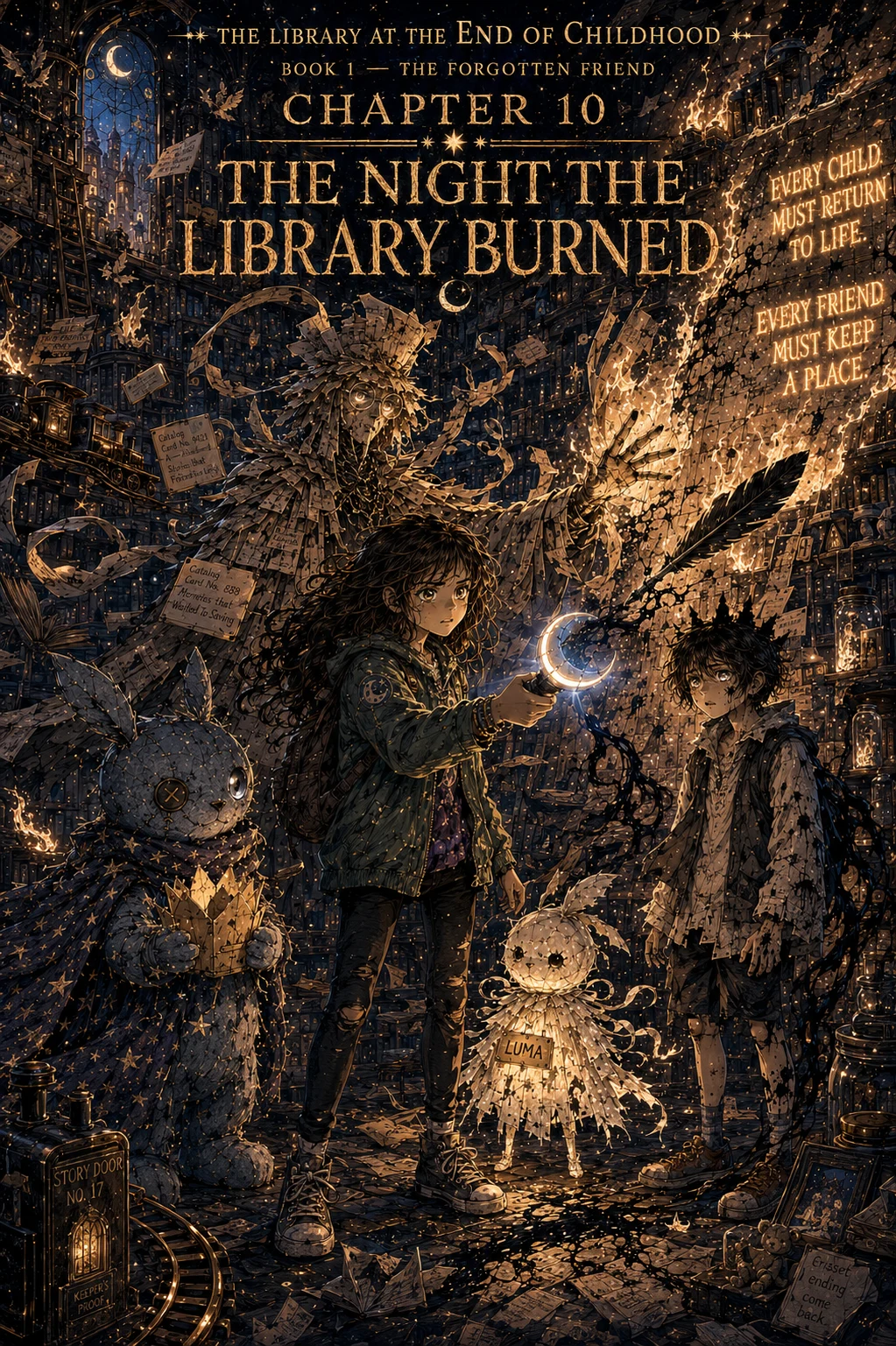
Chapter 10
20 pagesChapter 10 is the finale of Book 1. After the Author’s Room catches fire, Mira, Nono, Luma, The Archivist, and Aster realize the fire is not simply destroying the Library. It is revealing erased endings. The storyfire burns through crossed-out pages and hidden records, exposing truths the Library buried for years. The fire leads the group back to The Shelf of Abandoned Monsters, where the oldest wound of the Library is finally uncovered. Luma’s record is restored. She was never abandoned. Her child, Elian, came back — but the door refused to open. The Library falsely marked her as abandoned, and the Quiet Index erased the truth. This changes everything for the abandoned friends. Their labels begin to shift. “Abandoned” becomes “Returned Too Late.” “Child Unknown” becomes “Record Incomplete.” The Library starts admitting that many monsters were not monsters at all. They were wounded friends with missing records. Aster, now choosing to help, takes back the black quill and writes a new correction: Not abandoned. Returned too late. The whole Library hears it. But this awakens the full power of the Quiet Index. It begins the Final Silence, trying to erase every name, every record, and every painful memory so the Library can become perfectly quiet. The Archivist finally breaks from obedience. Instead of keeping records as they were given, they choose to keep what is true. They release all hidden records, and names begin returning across the Library. Nono’s shelf also changes. The small blue shelf that once felt like a prison finally opens a door. Mira and Nono understand that his shelf is no longer a place where he is trapped — it is a place he can keep. When the Final Silence nearly erases everything, Mira speaks the one name she refuses to lose: Nono. That one remembered name breaks the silence. Then everyone begins saying names: Mira, Elian, Aster, Pip, Rowan, Bramble, and many others. The Quiet Index cracks under the weight of every memory it tried to erase. By morning, the Library is damaged but alive. The abandoned shelves are open. Hidden records are restored. Luma has her true place. Aster begins repairing what they helped rewrite. The Archivist has changed. Nono’s shelf has a door. At the end, Mira must return to the real world. She and Nono say goodbye-for-now. Mira tears the old drawing in half, giving one half to Nono and keeping one half for herself. They both keep a place. Book 1 ends with Mira stepping back into her bedroom while Nono remains in the Library — no longer forgotten, no longer trapped. The final meaning of Chapter 10 is: Growing up is not the same as leaving forever.